Knee pain is one of the most common musculoskeletal complaints affecting adults worldwide. While occasional discomfort may result from overuse or minor injuries, persistent knee pain is often linked to arthritis. Understanding the causes, recognizing the symptoms, and exploring available treatment options can help individuals manage their condition effectively and maintain an active lifestyle.
What Causes Knee Osteoarthritis?
Arthritis is not a single condition but a group of disorders that affect the joints. The three most common forms of arthritis that can impact the knee include:
Osteoarthritis (OA): The most common type of knee arthritis, caused by the gradual breakdown of cartilage that cushions the joint.
Rheumatoid Arthritis (RA): An autoimmune disease in which the body’s immune system attacks the lining of the joints, causing inflammation and damage.
Post-Traumatic Arthritis: Arthritis that develops following a previous knee injury, fracture, or ligament damage.
Among these conditions, osteoarthritis accounts for the majority of chronic knee pain cases. As cartilage wears away, bones begin to rub against each other, leading to pain, stiffness, and reduced mobility. The condition typically develops gradually and becomes more common with age.
Several factors may increase the risk of developing knee osteoarthritis, including:
Excess body weight, which places additional stress on the knee joints.
A family history of osteoarthritis.
Previous knee injuries or surgeries.
Occupations involving repetitive kneeling, squatting, or heavy lifting.
Participation in high-impact sports over many years.
Other joint disorders or inflammatory conditions.
Advancing age and decreased muscle strength.
Common Symptoms of Knee Osteoarthritis
Osteoarthritis often progresses slowly, with symptoms becoming more noticeable over time. Early recognition allows for earlier intervention and better long-term outcomes.
Common signs and symptoms include:
Persistent or recurring knee pain.
Joint stiffness, especially after waking up or prolonged sitting.
Swelling around the knee.
Tenderness when pressure is applied.
Reduced range of motion.
Clicking, grinding, or popping sensations during movement.
Weakness or instability while walking.
Difficulty fully straightening or bending the knee.
If these symptoms interfere with daily activities, work, or exercise, it is important to consult a healthcare professional for a proper evaluation and diagnosis.
Do You Need Surgery?
Not necessarily. Surgery is generally considered only after conservative treatments have failed to provide adequate relief. Many patients successfully manage osteoarthritis through a combination of lifestyle changes and non-surgical therapies.
Lifestyle Modifications
Simple changes can significantly reduce knee pain and slow disease progression:
Achieving and maintaining a healthy body weight.
Following a balanced, anti-inflammatory diet.
Engaging in low-impact exercises such as walking, swimming, cycling, or yoga.
Strengthening the muscles around the knee.
Avoiding activities that place excessive stress on the joint.
Getting adequate rest and quality sleep.
Physical Therapy
A personalized physical therapy program can improve flexibility, strengthen supporting muscles, enhance balance, and reduce pain. Therapists may also recommend assistive devices such as knee braces, orthotics, or walking aids when appropriate.
Medications
Depending on the severity of symptoms, healthcare providers may recommend:
Acetaminophen for pain relief.
Nonsteroidal anti-inflammatory drugs (NSAIDs), such as ibuprofen or naproxen.
Topical pain-relieving creams or gels.
Prescription medications for more severe inflammation.
Some patients also choose dietary supplements such as glucosamine or SAMe, although scientific evidence regarding their effectiveness remains mixed. Patients should always discuss supplements with their physician before starting them.
What Are Hyaluronic Acid (Viscosupplement) Injections?
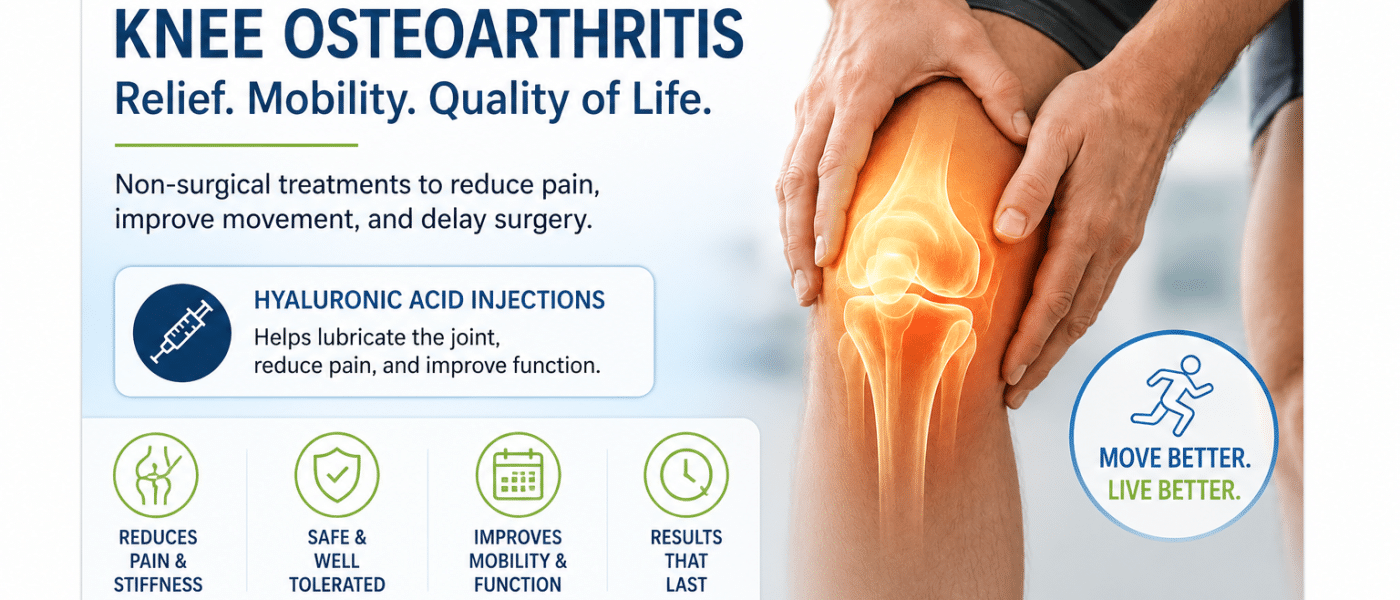
One of the most widely used non-surgical treatments for knee osteoarthritis is viscosupplementation, also known as hyaluronic acid injections.
Hyaluronic acid is a naturally occurring substance found within healthy joints. It acts as both a lubricant and shock absorber, allowing the knee to move smoothly. In osteoarthritis, the concentration and quality of hyaluronic acid decline, reducing the joint’s ability to absorb impact and increasing friction between the bones.
During viscosupplementation, a physician injects hyaluronic acid directly into the knee joint. The goal is to:
Improve joint lubrication.
Reduce friction during movement.
Relieve pain.
Improve mobility and function.
Delay the need for joint replacement surgery in appropriate patients.
Many patients begin experiencing symptom improvement several weeks after treatment, with relief lasting anywhere from three months to one year, depending on the individual and the specific product used. Repeat treatments may be recommended if symptoms return.
Are Hyaluronic Acid Injections Safe?
Hyaluronic acid injections are generally considered safe and well tolerated when administered by qualified healthcare professionals. Because hyaluronic acid closely resembles the substance naturally found in the body, allergic reactions are uncommon.
Temporary side effects may include:
Mild swelling around the injection site.
Redness or warmth.
Temporary soreness.
Mild joint stiffness for several days.
These effects are usually short-lived and resolve without additional treatment.
Who Is a Good Candidate?
Viscosupplementation may be recommended for patients who:
Have mild to moderate knee osteoarthritis.
Continue to experience pain despite exercise, weight management, or medications.
Wish to postpone or avoid knee replacement surgery.
Cannot tolerate certain pain medications or NSAIDs.
A healthcare provider will evaluate each patient’s medical history, physical examination, and imaging studies to determine whether hyaluronic acid injections are an appropriate treatment option.
Final Thoughts
Knee osteoarthritis is a common condition that can significantly impact mobility and quality of life. Fortunately, surgery is not the only solution. Early diagnosis, healthy lifestyle habits, physical therapy, medications, and minimally invasive treatments such as hyaluronic acid injections can help reduce pain, improve joint function, and maintain an active lifestyle.
Because every patient is unique, the most effective treatment plan should be developed in consultation with a qualified healthcare professional. With the right combination of therapies, many people with knee osteoarthritis can successfully manage their symptoms and delay or even avoid surgical intervention.