Ozempic® Side Effects: Common Reactions, Serious Risks, and Practical Management Strategies
Ozempic® (semaglutide) has become one of the most widely prescribed GLP-1 receptor agonists for managing type 2 diabetes. Beyond improving blood glucose control, it also supports meaningful weight loss and helps reduce cardiovascular risk in eligible patients. However, like all prescription medications, Ozempic can cause side effects that range from mild gastrointestinal discomfort to rare but serious medical complications.
Most patients tolerate treatment well, especially when doses are increased gradually. Understanding which side effects are expected, which require medical attention, and how healthcare providers can minimize treatment interruptions is essential for achieving successful long-term outcomes.
In this article, we’ll review the most common Ozempic side effects, discuss serious safety concerns, explain practical management strategies, and outline when patients should contact their healthcare provider.
Key Takeaways
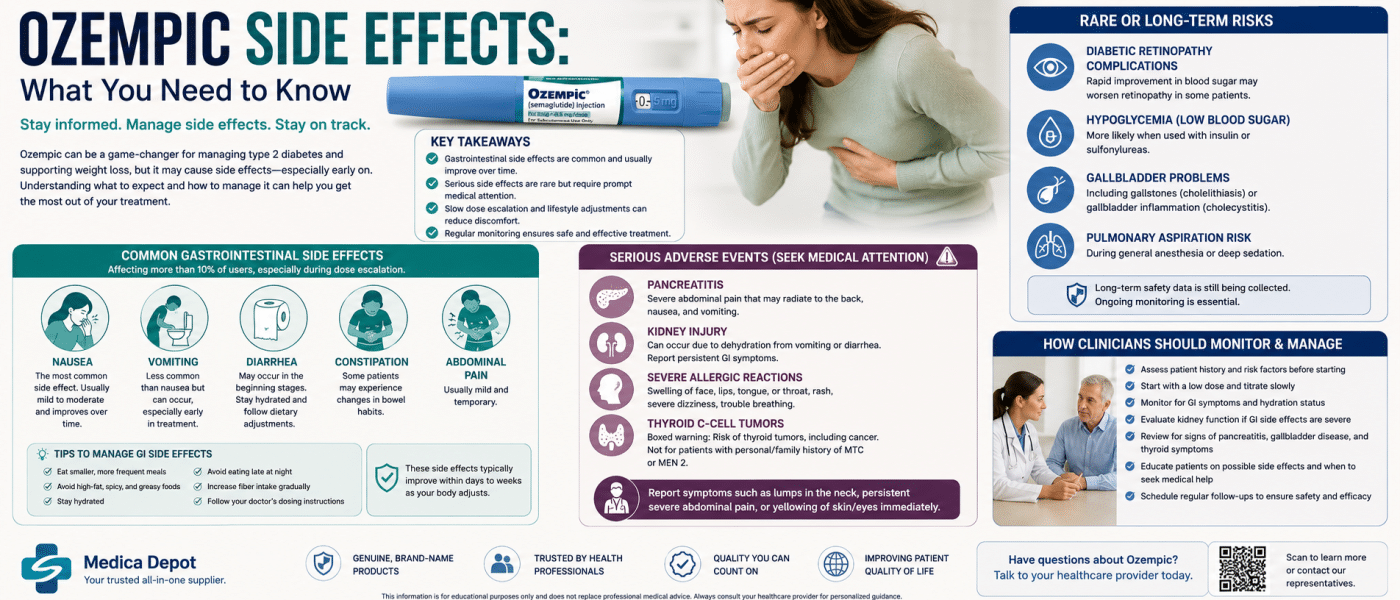
Gastrointestinal symptoms are the most frequently reported side effects of Ozempic, particularly during treatment initiation and dose escalation.
Most mild adverse effects improve naturally as the body adjusts to therapy.
Serious complications—including pancreatitis, kidney injury, gallbladder disease, and severe allergic reactions—are uncommon but require immediate medical attention.
Careful patient selection, gradual dose escalation, and regular monitoring improve treatment tolerability.
Ongoing communication between patients and healthcare providers is essential for safe long-term treatment.
Why Ozempic Causes Side Effects
Ozempic contains semaglutide, a glucagon-like peptide-1 (GLP-1) receptor agonist.
It works by:
Stimulating insulin secretion when blood glucose levels rise
Suppressing glucagon release
Slowing gastric emptying
Increasing feelings of fullness
Reducing appetite
While these mechanisms contribute to improved blood sugar control and weight reduction, delayed stomach emptying also explains why gastrointestinal symptoms are the most common side effects experienced during treatment.
Common Gastrointestinal Side Effects
Digestive symptoms typically appear during the first few weeks of therapy or after increasing the dose.
Common side effects include:
Nausea
Vomiting
Diarrhea
Constipation
Abdominal pain
Bloating
Indigestion
Reduced appetite
For most patients, these reactions are temporary and gradually improve as the digestive system adapts to the medication.
Managing Mild Gastrointestinal Symptoms
Most gastrointestinal symptoms can be reduced through simple lifestyle adjustments.
Healthcare providers often recommend patients:
Eat smaller, more frequent meals
Avoid high-fat or greasy foods
Eat slowly
Stop eating when comfortably full
Stay well hydrated
Avoid overeating
Limit alcohol consumption if appropriate
Gradual dose escalation according to prescribing guidelines remains one of the most effective ways to improve treatment tolerance.
Serious Side Effects Requiring Immediate Medical Attention
Although uncommon, Ozempic may cause serious adverse events that require prompt evaluation.
Pancreatitis
Patients should seek immediate medical attention if they develop:
Severe upper abdominal pain
Pain radiating to the back
Persistent vomiting
Fever
Treatment should be discontinued until pancreatitis has been ruled out.
Kidney Injury
Significant vomiting or diarrhea may lead to dehydration, increasing the risk of acute kidney injury.
Warning signs include:
Reduced urine output
Severe fatigue
Dizziness
Persistent dehydration
Monitoring renal function is particularly important in patients with pre-existing kidney disease.
Severe Allergic Reactions
Although rare, hypersensitivity reactions may include:
Facial swelling
Difficulty breathing
Severe rash
Tongue or throat swelling
Anaphylaxis
Patients experiencing these symptoms require emergency medical care.
Thyroid Safety Considerations
Ozempic carries a boxed warning regarding thyroid C-cell tumors observed in animal studies.
Although it remains unknown whether this risk applies to humans, Ozempic should not be used in patients with:
Personal history of medullary thyroid carcinoma (MTC)
Family history of MTC
Multiple Endocrine Neoplasia syndrome type 2 (MEN 2)
Healthcare providers should review each patient’s medical history carefully before initiating treatment.
Long-Term and Less Common Risks
While many patients use Ozempic safely for years, clinicians should remain aware of less common complications.
These may include:
Gallbladder Disease
Rapid weight loss may increase the risk of:
Gallstones
Cholecystitis
Upper right abdominal pain
Nausea after meals
Diabetic Retinopathy
Patients with pre-existing diabetic eye disease may experience worsening retinopathy, particularly during periods of rapid glucose improvement.
Routine ophthalmologic examinations remain important.
Hypoglycemia
Ozempic alone rarely causes severe hypoglycemia.
However, the risk increases when combined with:
Insulin
Sulfonylureas
Other glucose-lowering medications
Dose adjustments may be necessary.
Patient Monitoring During Treatment
Successful treatment requires regular clinical follow-up.
Healthcare providers should monitor:
Blood glucose control
HbA1c levels
Weight changes
Kidney function
Gastrointestinal symptoms
Medication adherence
Injection technique
Potential adverse reactions
Regular assessments allow clinicians to identify complications early while optimizing treatment effectiveness.
Strategies to Improve Tolerability
Several practical approaches help patients remain on therapy.
These include:
Following recommended dose-escalation schedules
Delaying dose increases if symptoms remain significant
Providing dietary counseling
Encouraging adequate hydration
Reviewing concurrent medications
Treating persistent nausea when clinically appropriate
Individualized treatment plans often improve long-term adherence.
When Patients Should Contact Their Healthcare Provider
Patients should seek medical advice if they experience:
Persistent vomiting
Severe abdominal pain
Bloody stools
Signs of dehydration
Difficulty swallowing
Neck swelling
Yellowing of the skin or eyes
Severe allergic reactions
Ongoing inability to tolerate treatment
Prompt evaluation helps prevent more serious complications.
Conclusion
Ozempic has become an important treatment option for adults with type 2 diabetes, offering significant improvements in glycemic control and weight management. While gastrointestinal side effects are common—particularly during the early stages of treatment—most are mild and improve with time, gradual dose escalation, and supportive care.
Healthcare providers play a critical role in preparing patients for expected side effects, identifying serious complications, and providing ongoing monitoring throughout therapy. With appropriate patient education and individualized management, most patients can successfully continue treatment while achieving meaningful long-term clinical benefits.
Frequently Asked Questions
What are the most common side effects of Ozempic?
The most frequently reported side effects include nausea, vomiting, diarrhea, constipation, abdominal pain, and reduced appetite.
How long do Ozempic side effects usually last?
Most gastrointestinal symptoms improve within several weeks as the body adapts to treatment.
Can Ozempic cause pancreatitis?
Although uncommon, pancreatitis is a serious potential complication. Severe persistent abdominal pain requires immediate medical evaluation.
Who should not use Ozempic?
Ozempic is contraindicated in patients with a personal or family history of medullary thyroid carcinoma or Multiple Endocrine Neoplasia syndrome type 2 (MEN 2).
How can patients reduce nausea while taking Ozempic?
Eating smaller meals, avoiding high-fat foods, staying hydrated, eating slowly, and following the recommended dose-escalation schedule can help minimize nausea.