Osteoporosis affects millions of people worldwide and significantly increases the risk of fractures that can lead to chronic pain, disability, and reduced quality of life. For individuals at very high fracture risk, anabolic therapies such as Evenity® (romosozumab-aqqg) offer an innovative approach by promoting new bone formation while slowing bone resorption. Clinical studies have shown that Evenity can rapidly improve bone mineral density and reduce the incidence of vertebral fractures, making it an important treatment option for severe osteoporosis.
Like all prescription medications, however, Evenity may cause side effects that range from mild injection-site reactions to rare but serious cardiovascular events. Understanding these potential adverse reactions allows patients and healthcare professionals to balance the benefits of treatment against possible risks and implement appropriate monitoring strategies throughout therapy.
In this article, we’ll examine the most common Evenity side effects, discuss rare but serious safety concerns, review recommended monitoring practices, and explain how healthcare providers can optimize treatment outcomes while minimizing complications.
Key Takeaways
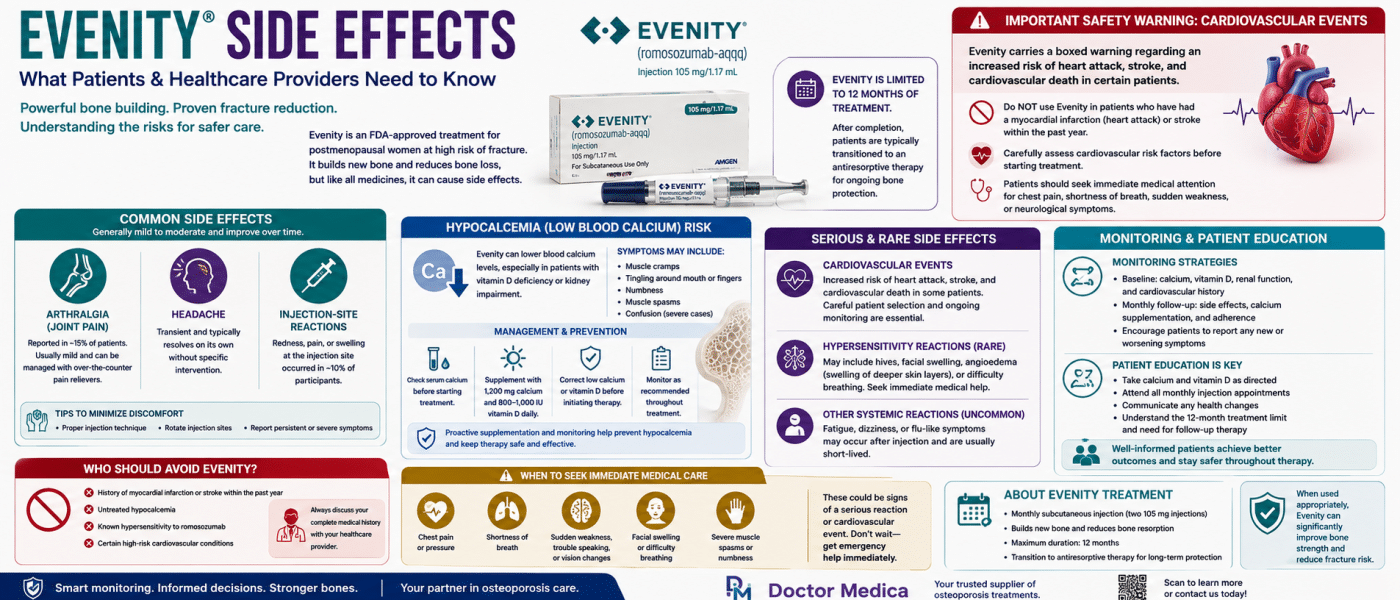
The most common Evenity side effects include joint pain, headache, and injection-site reactions, which are generally mild and temporary.
Hypocalcemia (low blood calcium) can occur, particularly in patients with vitamin D deficiency or impaired kidney function.
Evenity carries a boxed warning regarding cardiovascular events, including heart attack and stroke in certain high-risk patients.
Monthly monitoring, calcium supplementation, and careful patient selection are essential for safe treatment.
Most patients complete the recommended 12-month course successfully with appropriate medical supervision.
Understanding Evenity Therapy
Evenity is a monoclonal antibody that works differently from traditional osteoporosis medications.
Rather than only slowing bone loss, it simultaneously:
Stimulates new bone formation
Decreases bone resorption
Improves bone mineral density rapidly
Reduces fracture risk
Because its anabolic effect gradually declines over time, Evenity treatment is limited to 12 monthly doses, after which patients are typically transitioned to an antiresorptive medication.
Common Evenity Side Effects
Most patients tolerate Evenity well, and the majority of side effects are mild to moderate.
The most frequently reported adverse reactions include:
Joint Pain (Arthralgia)
Joint discomfort is one of the most commonly reported side effects during clinical trials.
Patients may experience:
Mild stiffness
Aching joints
Temporary discomfort after injections
Symptoms often improve with time and can usually be managed using physician-approved pain relief measures.
Headache
Some patients develop headaches during the first weeks of treatment.
Typical characteristics include:
Mild to moderate intensity
Temporary duration
Resolution without medical intervention
Persistent or severe headaches should be evaluated by a healthcare provider.
Injection-Site Reactions
Because Evenity is administered as a monthly subcutaneous injection, local reactions may occur.
Common symptoms include:
Redness
Swelling
Tenderness
Mild bruising
Rotating injection sites and proper injection technique help minimize these reactions.
Hypocalcemia (Low Blood Calcium)
One important safety consideration with Evenity is hypocalcemia.
Because the medication stimulates rapid bone formation, calcium is actively incorporated into newly forming bone, which may temporarily lower blood calcium levels.
Patients at increased risk include:
Individuals with severe kidney disease
Patients with vitamin D deficiency
Those with inadequate calcium intake
Possible symptoms include:
Muscle cramps
Tingling around the mouth
Numbness in fingers
Muscle spasms
Confusion in severe cases
Preventing Hypocalcemia
Healthcare providers typically recommend:
Measuring serum calcium before treatment
Correcting vitamin D deficiency
Daily calcium supplementation
Vitamin D supplementation throughout therapy
These preventive measures significantly reduce the likelihood of clinically important hypocalcemia.
Serious but Rare Side Effects
Although uncommon, certain adverse reactions require immediate medical attention.
Cardiovascular Events
Evenity includes a boxed warning regarding potential cardiovascular risk.
Clinical studies identified a slightly increased incidence of:
Heart attack
Stroke
Cardiovascular death
As a result, Evenity is generally not recommended for patients who experienced:
Myocardial infarction within the previous year
Stroke within the previous year
Before initiating therapy, clinicians should carefully evaluate each patient’s cardiovascular history and overall risk profile.
Hypersensitivity Reactions
Rare allergic reactions have been reported.
Possible symptoms include:
Facial swelling
Hives
Difficulty breathing
Angioedema
Severe skin reactions
Patients experiencing these symptoms should seek immediate medical care.
General Systemic Reactions
Some individuals may report temporary symptoms such as:
Fatigue
Dizziness
Flu-like symptoms
Mild weakness
These effects are usually short-lived and resolve without treatment.
Monitoring During Evenity Treatment
Safe use of Evenity requires ongoing monitoring throughout the treatment course.
Healthcare providers commonly perform:
Baseline Assessment
Before the first injection, clinicians evaluate:
Serum calcium
Vitamin D status
Kidney function
Fracture history
Cardiovascular risk
Monthly Follow-Up
During treatment, providers monitor:
Side effects
Treatment adherence
Calcium supplementation
Injection schedule
New cardiovascular symptoms
Regular follow-up allows early identification and management of potential complications.
Patient Education
Successful treatment depends on clear communication between patients and healthcare professionals.
Patients should understand:
Why monthly injections are necessary
The importance of calcium and vitamin D supplementation
Which symptoms require immediate medical attention
Expected treatment duration
The need for follow-up osteoporosis therapy after completing Evenity
Educated patients are more likely to complete therapy successfully and achieve optimal improvements in bone density.
Who Should Avoid Evenity?
Evenity may not be appropriate for everyone.
Healthcare providers generally avoid treatment in patients with:
Recent heart attack
Recent stroke
Untreated hypocalcemia
Known hypersensitivity to romosozumab
Certain high-risk cardiovascular conditions
Individual risk assessment remains essential before initiating therapy.
When to Seek Immediate Medical Care
Patients should contact their healthcare provider or seek emergency care if they experience:
Chest pain
Sudden weakness
Difficulty speaking
Vision changes
Severe allergic reactions
Facial swelling
Difficulty breathing
Persistent muscle spasms or severe tingling
Prompt evaluation helps reduce the risk of serious complications.
Conclusion
Evenity has become an important treatment option for patients with severe osteoporosis because of its unique ability to rapidly increase bone formation while reducing bone resorption. Although most side effects—including joint pain, headache, and injection-site reactions—are mild and manageable, clinicians must remain vigilant regarding hypocalcemia and the medication’s boxed cardiovascular warning.
Through careful patient selection, baseline laboratory testing, appropriate calcium and vitamin D supplementation, and regular follow-up visits, healthcare providers can safely maximize the benefits of Evenity while minimizing treatment-related risks. With informed monitoring and patient education, Evenity continues to offer significant improvements in bone strength, fracture prevention, and long-term quality of life for appropriately selected patients.