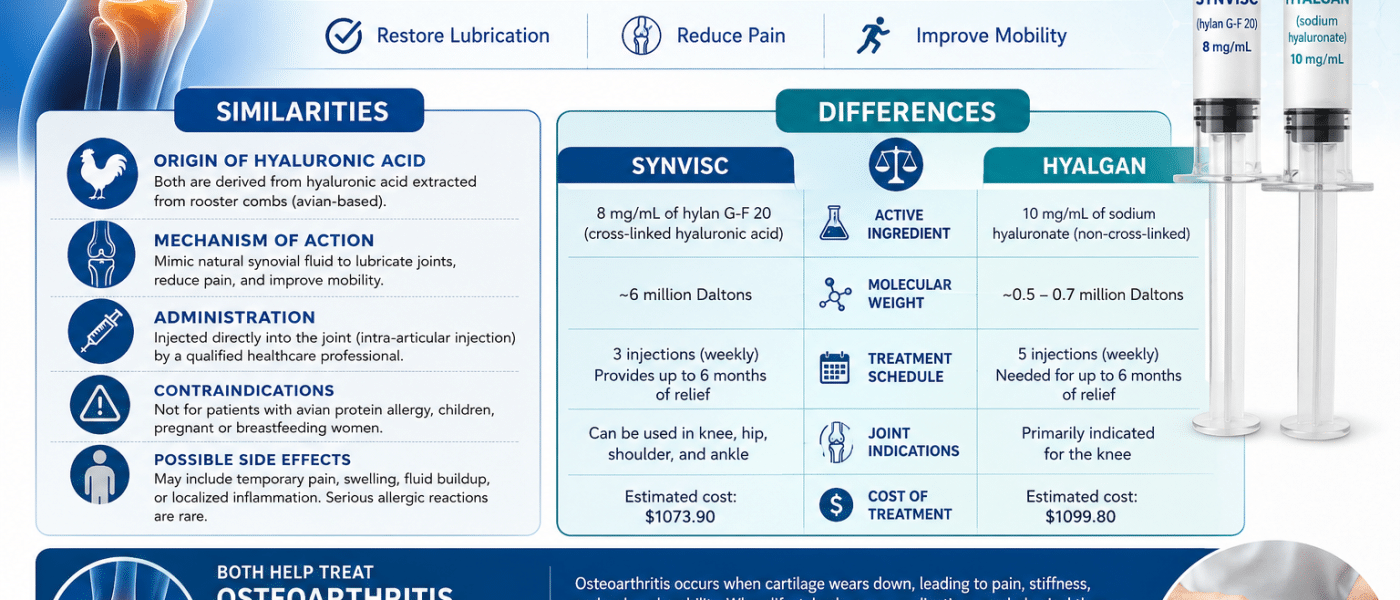
What Are the Similarities Between Synvisc and Hyalgan?
Synvisc and Hyalgan are two well-known viscosupplement injections used to relieve pain caused by osteoarthritis (OA). Both products contain hyaluronic acid and are injected directly into affected joints to improve lubrication, reduce discomfort, and enhance mobility. Although they differ in formulation and treatment schedules, they share several important characteristics.
Origin of Hyaluronic Acid
Both Synvisc and Hyalgan are brand-name viscosupplements derived from naturally occurring hyaluronic acid. The hyaluronic acid used in both products is extracted from rooster combs, making them avian-based formulations.
Mechanism of Action
Both treatments are designed to restore the natural cushioning and lubricating properties of synovial fluid. After being injected into the joint, they help reduce friction between the bones, relieve pain, improve joint function, and support smoother movement.
Administration
Synvisc and Hyalgan are administered through intra-articular injections, meaning they are injected directly into the joint space by a qualified healthcare professional. Before the procedure, the injection site should be carefully examined, cleaned, and disinfected to minimize the risk of infection.
Contraindications
Both products are contraindicated in patients with known allergies to avian proteins, feathers, or egg products. They are also generally not recommended for children, pregnant women, or breastfeeding mothers due to limited safety data. Healthcare providers should review each patient’s medical history before recommending treatment.
Possible Side Effects
The safety profiles of Synvisc and Hyalgan are similar. Common side effects include temporary pain, swelling, warmth, stiffness, or fluid accumulation around the injection site. Serious allergic reactions are uncommon but remain a potential risk.
What Are the Differences Between Synvisc and Hyalgan?
Although both products belong to the same class of viscosupplements, they differ in several key areas.
Active Ingredient
Synvisc contains hylan G-F 20, a chemically cross-linked derivative of hyaluronic acid with a concentration of 8 mg/mL. Hyalgan contains 10 mg/mL of sodium hyaluronate, which is a naturally occurring form of hyaluronic acid. The cross-linking process used in Synvisc makes it thicker and more durable inside the joint.
Molecular Weight
One of the biggest differences is molecular weight. Synvisc has a molecular weight of approximately 6 million Daltons, closely resembling the viscosity of healthy synovial fluid. Hyalgan has a significantly lower molecular weight of around 500,000–730,000 Daltons, resulting in a thinner solution.
Treatment Schedule
Synvisc is typically administered as three injections given one week apart, providing symptom relief for up to six months. Hyalgan usually requires five weekly injections to achieve similar long-term results. While three Hyalgan injections may provide temporary improvement, a complete five-injection course is generally recommended for maximum benefit.
Joint Indications
Synvisc has been studied for use in multiple synovial joints, including the knee, hip, shoulder, and ankle, depending on local regulatory approvals and physician experience. Hyalgan is primarily indicated for the treatment of knee osteoarthritis.
Treatment Cost
The overall cost of treatment is generally comparable, although prices vary by country, healthcare provider, and insurance coverage. Since Hyalgan often requires more injections, the total treatment cost may be slightly higher than Synvisc in some cases.
Both Synvisc and Hyalgan Help Treat Osteoarthritis
Osteoarthritis is the most common form of arthritis and is caused by the gradual breakdown of cartilage that cushions the joints. As cartilage deteriorates, the amount and quality of synovial fluid decrease, leading to increased friction between bones. This results in symptoms such as joint pain, stiffness, swelling, and reduced mobility.
Osteoarthritis most commonly affects the knees, hips, shoulders, and ankles, particularly in older adults, individuals who are overweight, and those with previous joint injuries.
Initial treatment typically includes lifestyle modifications, physical therapy, weight management, pain relievers, and non-steroidal anti-inflammatory drugs (NSAIDs). When these conservative treatments fail to provide sufficient relief, viscosupplementation may be considered.
Viscosupplementation involves injecting hyaluronic acid directly into the affected joint to restore lubrication and cushioning. By improving joint mechanics and reducing friction, these injections can relieve pain and improve mobility for several months. Synvisc and Hyalgan are among the most widely used viscosupplement products for managing knee osteoarthritis in patients who have not achieved adequate relief from first-line therapies.