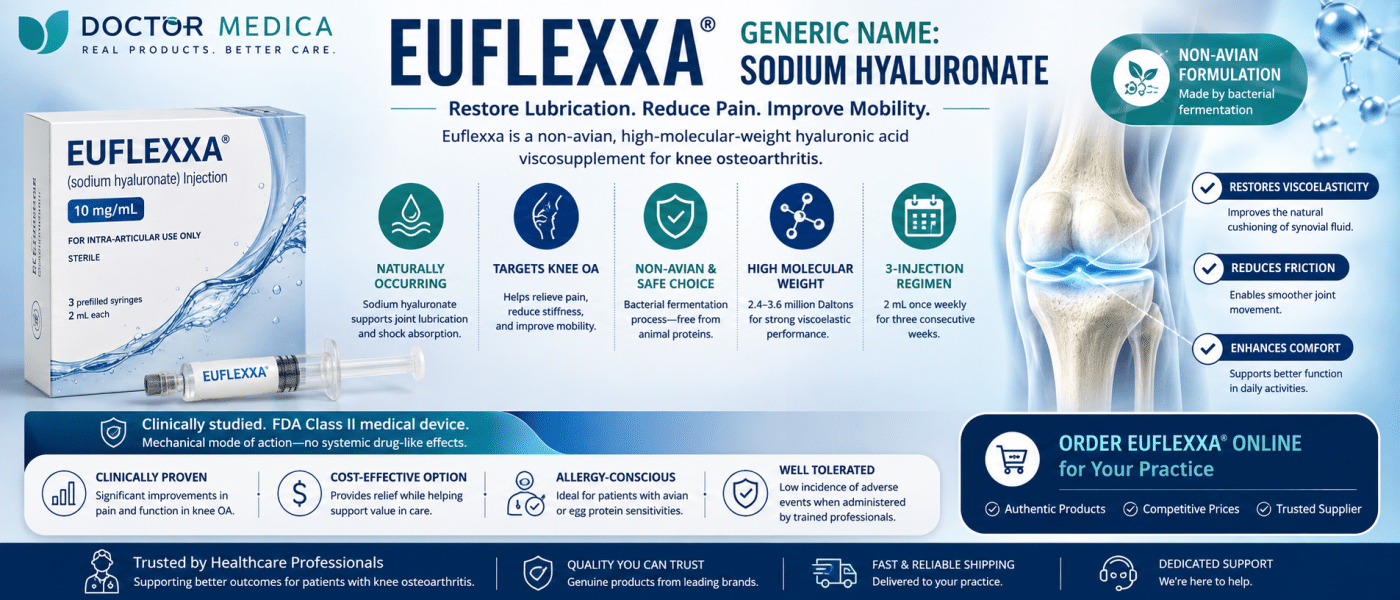
Euflexxa is a widely used viscosupplement for patients with knee osteoarthritis (OA) who are looking for a non-steroidal approach to managing joint pain and improving mobility. The generic name of Euflexxa is sodium hyaluronate, a form of hyaluronic acid that naturally occurs in the body and plays an important role in joint lubrication and shock absorption.
In healthy joints, hyaluronic acid helps synovial fluid maintain its viscosity and allows the joint surfaces to move smoothly. With osteoarthritis, the amount and quality of naturally occurring hyaluronic acid can decline, contributing to friction, stiffness, and discomfort during movement. Euflexxa is designed to supplement this depleted joint fluid through intra-articular injection.
One of the distinguishing features of Euflexxa is its non-avian origin. It is manufactured through bacterial fermentation, rather than being derived from rooster combs. This makes its formulation particularly relevant when clinicians are considering the source of a hyaluronic acid product and potential sensitivities to animal-derived proteins.
In this article, we’ll explore the Euflexxa generic name, how sodium hyaluronate works, its formulation and dosing schedule, and how it compares with other viscosupplementation products used for knee osteoarthritis.
Key Takeaways
The generic name of Euflexxa is sodium hyaluronate, a form of hyaluronic acid used as a viscosupplement for knee osteoarthritis.
Sodium hyaluronate is naturally present in synovial fluid, where it contributes to lubrication, cushioning, and shock absorption.
Euflexxa is produced through bacterial fermentation, making it a non-avian hyaluronic acid product.
Its primary effect is local and mechanical, helping improve the viscoelastic properties of synovial fluid rather than producing a systemic anti-inflammatory effect.
Euflexxa is supplied as a 2 mL intra-articular injection and is typically administered once weekly for three consecutive weeks.
Clinical studies have demonstrated improvements in knee pain and function following a course of Euflexxa treatment.
Compared with other hyaluronic acid products, Euflexxa differs in its source, molecular characteristics, formulation, and injection schedule.
Patients with knee OA should discuss their symptoms, medical history, previous treatments, and expectations with a qualified healthcare professional before receiving viscosupplementation.
About: Doctor Medica is your trusted supplier of medical and aesthetic products for professional use. We offer authentic products from leading brands for licensed healthcare providers and practices.
Recommended Products
EUFLEXXA® 10 mg/mL
Euflexxa is supplied as a prefilled syringe containing sodium hyaluronate for intra-articular administration in the treatment of knee osteoarthritis.
What Is the Generic Name of Euflexxa?
The Euflexxa generic name is sodium hyaluronate. Sodium hyaluronate is the sodium salt of hyaluronic acid, a naturally occurring polysaccharide found throughout the human body, including the joints, skin, and connective tissues.
Within the knee, hyaluronic acid is an important component of synovial fluid. Its viscoelastic properties allow it to perform two important functions: lubricating the joint during movement and helping absorb mechanical forces placed on the cartilage.
In osteoarthritis, the composition and physical properties of synovial fluid can change. Reduced concentrations and altered molecular characteristics of hyaluronic acid may contribute to reduced lubrication and increased mechanical stress within the joint.
Viscosupplementation aims to supplement the joint with hyaluronic acid and improve the physical characteristics of the synovial environment.
Euflexxa contains a high-molecular-weight sodium hyaluronate produced through bacterial fermentation. Its non-avian manufacturing process distinguishes it from some older hyaluronic acid products that were derived from animal sources.
How Does Sodium Hyaluronate Work in the Knee?
Unlike systemic medications that circulate throughout the body, Euflexxa is administered directly into the affected joint. Its primary role is to provide local viscosupplementation.
Once introduced into the knee, sodium hyaluronate can contribute to the viscoelastic properties of the synovial fluid. This may help the joint surfaces move more smoothly and reduce mechanical stress associated with movement.
The main functions of sodium hyaluronate include:
Joint Lubrication
Hyaluronic acid helps reduce friction between the articular surfaces of the knee. Improving lubrication may make everyday movements such as walking, standing, or climbing stairs more comfortable.
Shock Absorption
The viscoelastic properties of sodium hyaluronate allow it to help distribute mechanical forces throughout the joint. This cushioning effect is particularly relevant in weight-bearing joints such as the knee.
Support for Joint Function
By improving the physical environment within the joint, viscosupplementation may help some patients experience improvements in mobility and stiffness.
Local Rather Than Systemic Action
Euflexxa is injected directly into the knee rather than being taken orally or administered systemically. Its intended effect is therefore primarily localized to the treated joint.
It is important to distinguish this mechanism from corticosteroids and other medications that primarily work through pharmacological or anti-inflammatory pathways. Euflexxa is principally a viscoelastic supplement rather than a systemic anti-inflammatory drug.
Euflexxa Formulation and Manufacturing Process
The origin of a hyaluronic acid product can be an important consideration when selecting a viscosupplement.
Euflexxa is manufactured using bacterial fermentation technology. This differs from avian-derived hyaluronic acid products, which historically have been manufactured using material obtained from rooster combs.
The non-avian manufacturing process offers several potential advantages when considering product composition and patient history.
Key characteristics of Euflexxa include:
Active ingredient: Sodium hyaluronate
Origin: Non-avian
Manufacturing: Bacterial fermentation
Administration: Intra-articular injection
Indication: Knee osteoarthritis
Formulation: Non-cross-linked hyaluronic acid
Standard course: Three weekly injections
Because product characteristics can vary between viscosupplements, clinicians should review the current product labeling before selecting and administering a specific formulation.
Euflexxa Injection Schedule and Administration
The standard Euflexxa treatment course consists of three intra-articular injections, with one injection administered approximately one week apart.
This means the typical schedule is:
Week 1 → Week 2 → Week 3
The injection should be performed by an appropriately trained healthcare professional using appropriate aseptic technique.
Before treatment, clinicians generally assess the affected knee, review the patient’s medical history, and consider factors such as previous injections, joint infections, allergies, and other potential contraindications.
After administration, patients may experience temporary symptoms such as:
Mild pain or tenderness
Swelling around the injection site
Stiffness
Warmth or discomfort in the treated knee
Patients should follow their healthcare provider’s post-injection instructions and report unusual or persistent symptoms.
Euflexxa vs Other Hyaluronic Acid Injections
Euflexxa is one of several hyaluronic acid products available for viscosupplementation. While these products share the same general therapeutic concept, they can differ in molecular characteristics, manufacturing source, formulation, injection schedule, and regulatory labeling.
Feature Euflexxa Other HA Viscosupplements
Active ingredient Sodium hyaluronate Hyaluronic acid / sodium hyaluronate
Manufacturing source Bacterial fermentation Varies by product
Avian-derived No Depends on product
Administration Intra-articular Intra-articular
Typical Euflexxa schedule 3 weekly injections Varies
Primary use Knee OA Depends on product
Mechanism Viscosupplementation Viscosupplementation
When comparing products, clinicians should not focus solely on molecular weight or injection volume. The approved indication, formulation, manufacturing method, clinical evidence, patient characteristics, and treatment protocol should all be considered.
Euflexxa and Osteoarthritis: What Can Patients Expect?
Osteoarthritis is a progressive joint condition that can cause pain, stiffness, reduced range of motion, and difficulty performing everyday activities. Treatment is usually individualized and may include exercise, weight management when appropriate, physical therapy, oral or topical medications, injections, and other interventions.
Viscosupplementation may be considered when conservative measures have not provided sufficient relief or when a patient is seeking an alternative to other injectable approaches.
However, response to hyaluronic acid treatment varies from patient to patient. Some individuals may experience meaningful improvements in pain and mobility, while others may notice limited benefit.
Euflexxa should therefore be viewed as one component of a broader osteoarthritis management strategy rather than a cure for the underlying degenerative process.
Safety Considerations With Euflexxa
As with any intra-articular procedure, Euflexxa administration can be associated with local adverse reactions.
Possible reactions include:
Injection-site pain
Swelling
Joint stiffness
Tenderness
Redness or warmth
More serious complications, although uncommon, can occur with intra-articular injections. Appropriate patient selection, sterile technique, and professional administration are important for reducing procedural risks.
Euflexxa should not be injected into a joint that is actively infected, and healthcare professionals should review the product’s current prescribing and safety information before treatment.
Patients should seek medical attention if they develop severe pain, significant swelling, fever, marked redness, or other symptoms suggesting infection or an unexpected reaction.
Who May Be a Candidate for Euflexxa?
Euflexxa may be considered for adults with knee osteoarthritis who continue to experience symptoms despite other conservative measures.
A healthcare professional may consider factors such as:
Severity of osteoarthritis
Level of knee pain
Functional limitations
Previous response to treatment
Other medical conditions
Previous injections
Patient treatment preferences
Potential contraindications or allergies
The decision to use viscosupplementation should be individualized rather than based solely on the presence of osteoarthritis.
Why the Euflexxa Generic Name Matters
Knowing that the generic name of Euflexxa is sodium hyaluronate helps clarify what type of treatment the product provides.
The term “sodium hyaluronate” describes the active hyaluronic acid component, while Euflexxa is the specific branded formulation. Understanding this distinction can be useful when comparing different viscosupplements because products containing hyaluronic acid are not necessarily identical.
They may differ in:
Molecular weight
Concentration
Cross-linking
Manufacturing source
Injection volume
Treatment frequency
Regulatory labeling
Clinical evidence
For healthcare professionals, these differences can help guide product selection according to individual patient needs.
Conclusion
The Euflexxa generic name, sodium hyaluronate, refers to a naturally occurring substance that plays an essential role in maintaining the lubrication and cushioning properties of synovial fluid.
As a viscosupplement, Euflexxa is injected directly into the knee to support the joint’s mechanical environment and potentially improve pain and mobility in patients with osteoarthritis. Its non-avian, fermentation-derived formulation provides an important distinction from certain animal-derived hyaluronic acid products.
With a standard course of three weekly injections, Euflexxa offers healthcare professionals another option when developing individualized treatment strategies for knee osteoarthritis.
Ultimately, the choice between Euflexxa and other viscosupplements should take into account the patient’s clinical history, treatment goals, product characteristics, and current clinical guidance. A qualified healthcare professional can determine whether viscosupplementation is appropriate and which product best fits the patient’s needs.
FAQs
1. What is the generic name of Euflexxa?
The generic name of Euflexxa is sodium hyaluronate, a form of hyaluronic acid used as a viscosupplement for knee osteoarthritis.
2. How is Euflexxa different from some other hyaluronic acid injections?
Euflexxa is produced using bacterial fermentation and is non-avian. Other hyaluronic acid products may use different manufacturing methods or sources.
3. How many Euflexxa injections are typically required?
The standard Euflexxa treatment course consists of one 2 mL injection per week for three weeks, according to its labeled dosing regimen.
4. How does Euflexxa work?
Euflexxa provides sodium hyaluronate directly to the knee joint. Its primary function is to improve the viscoelastic and lubricating properties of the synovial environment.
5. Is Euflexxa a steroid?
No. Euflexxa is a hyaluronic acid viscosupplement and is not a corticosteroid.
6. Is Euflexxa suitable for everyone with knee osteoarthritis?
Not necessarily. Treatment decisions depend on the severity of symptoms, medical history, previous treatments, and individual risk factors. A qualified healthcare professional should determine whether Euflexxa is appropriate.