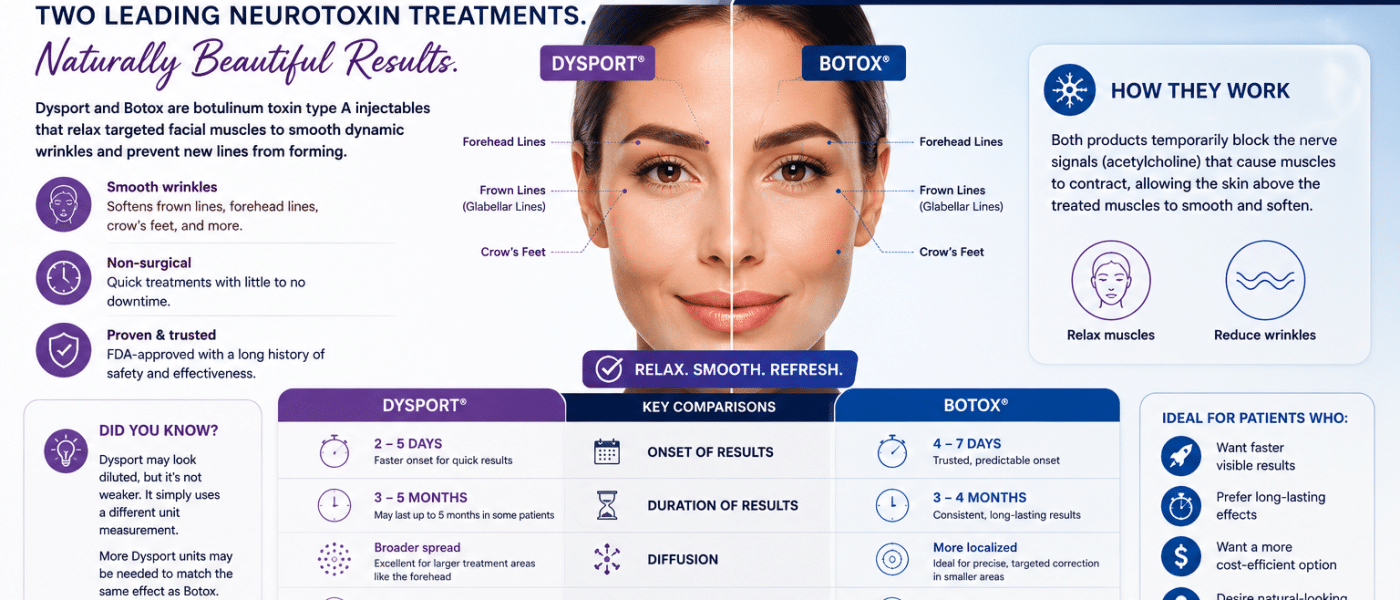
Botulinum toxin injections have become one of the most popular non-surgical cosmetic treatments worldwide, helping millions of people reduce the appearance of facial wrinkles and maintain a youthful appearance. Among the most recognized brands are Botox® and Dysport®, two FDA-approved botulinum toxin type A products used for both aesthetic and therapeutic purposes.
Although both products work by temporarily relaxing facial muscles responsible for dynamic wrinkles, they differ in formulation, diffusion characteristics, onset of action, dosage, and overall treatment approach. Understanding these differences helps medical professionals and patients choose the most appropriate neurotoxin for individual treatment goals.
This article compares Dysport and Botox, examining their composition, mechanism of action, clinical performance, and key similarities and differences.