Injectable Silicone: History, Uses, and Potential Risks
A Brief History
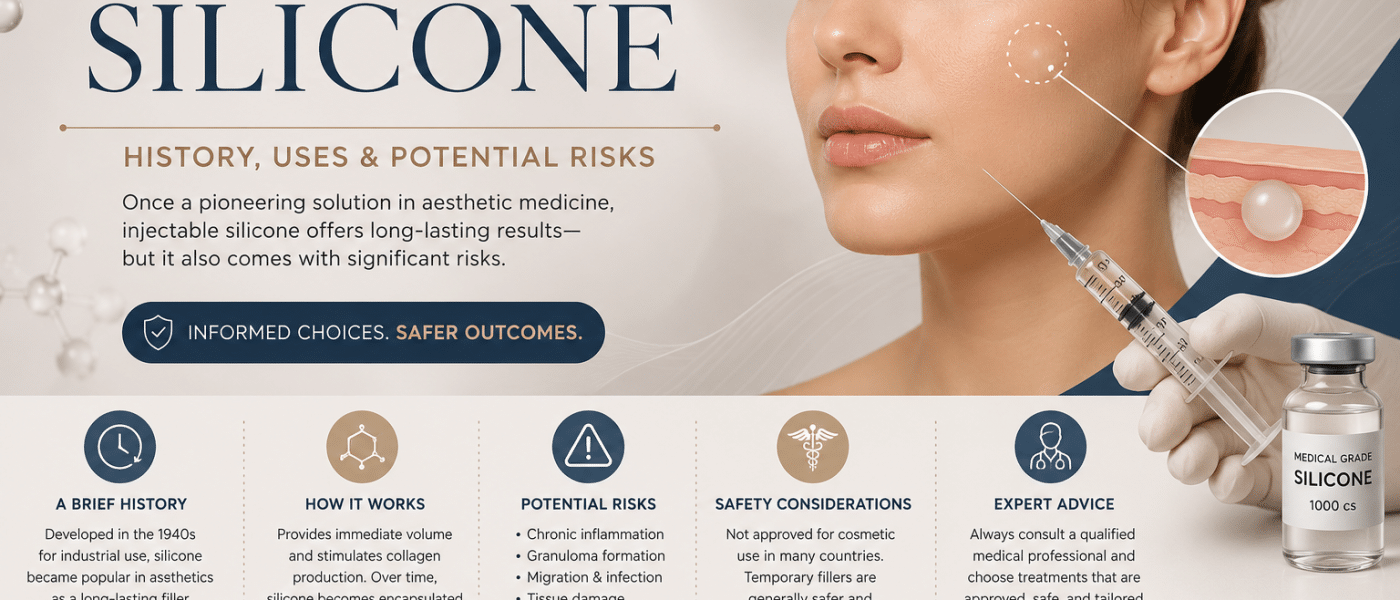
Liquid silicone was first developed for industrial applications in the 1940s. Over the following decades, physicians began exploring its use as a permanent soft-tissue filler to restore facial volume and correct tissue loss. Before modern hyaluronic acid fillers became available, silicone was one of the few long-lasting injectable materials used in aesthetic medicine.
What Is Injectable Silicone?
Injectable silicone is a highly purified form of polydimethylsiloxane, a chemically stable and non-reactive material. Unlike temporary dermal fillers, silicone is considered permanent because it remains in the tissue after injection. Today, its cosmetic use is highly restricted in many countries, and it is only used in limited medical situations.
How Does It Work?
When injected in very small amounts, silicone provides immediate volume while also stimulating the body’s natural collagen production over time. The material becomes surrounded by fibrous tissue, helping maintain the treated area’s shape. Because silicone is permanent, achieving natural results requires precise technique and careful patient selection.
Potential Risks
Although some experienced physicians have reported successful outcomes, injectable silicone carries significant risks, including:
Chronic inflammation and delayed immune reactions.
Formation of granulomas (firm inflammatory nodules).
Product migration to surrounding tissues.
Infection, swelling, and tissue damage.
Permanent aesthetic complications that are difficult to correct.
Since silicone cannot be easily dissolved or removed, treating complications often requires surgery.
Current Safety Considerations
Modern aesthetic medicine generally favors temporary dermal fillers, such as hyaluronic acid, because they offer predictable results and can be dissolved if necessary. Injectable silicone is not approved for cosmetic soft-tissue augmentation in many regions and should only be considered under strict medical supervision when clinically appropriate.
Key Takeaway
While injectable silicone played an important role in the early development of cosmetic fillers, its permanent nature and potential for serious long-term complications have greatly limited its use today. Patients seeking facial enhancement should always consult a qualified medical professional and choose treatments that are approved, well-studied, and tailored to their individual needs.