Common Wrinkles That Appear with Age
As we age, our skin gradually loses collagen, elastin, hyaluronic acid, and facial volume. These natural changes reduce skin elasticity and lead to the formation of wrinkles, folds, and hollow areas. While aging cannot be stopped, understanding the most common types of facial wrinkles can help you choose the right treatment.
Common Types of Age-Related Wrinkles
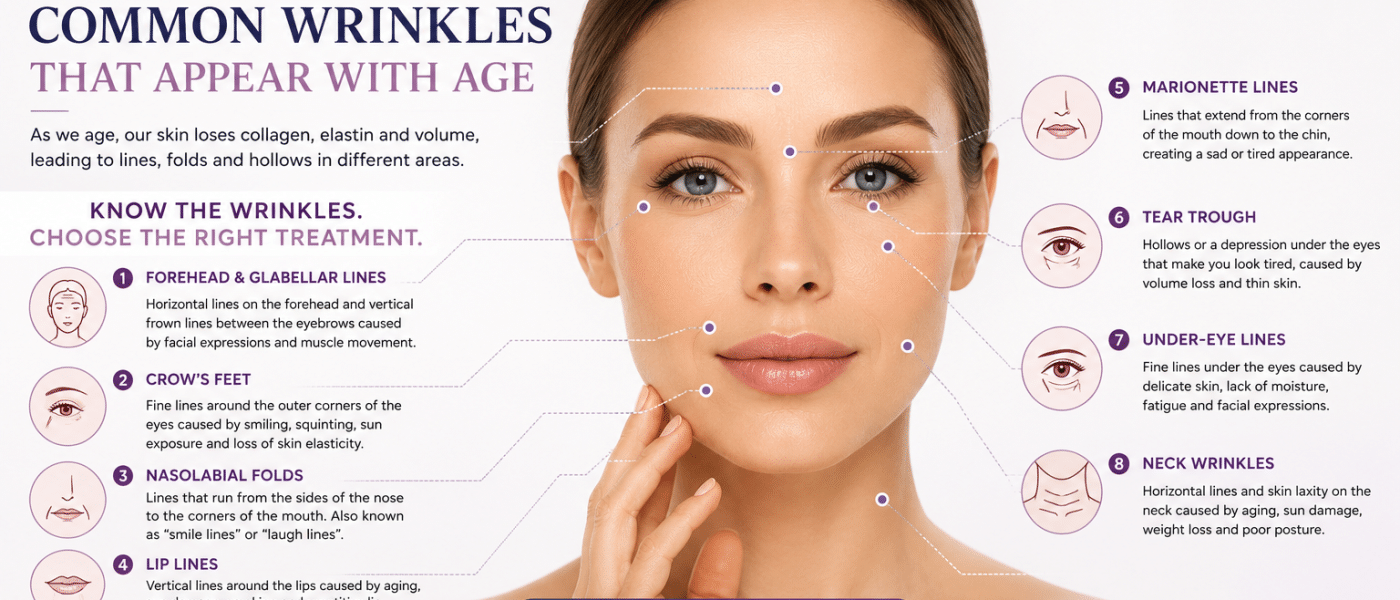
Forehead and Glabellar Lines
Often called frown lines, these vertical and horizontal wrinkles develop from repeated facial expressions such as frowning, squinting, and raising the eyebrows.
Crow’s Feet
These fine lines appear around the outer corners of the eyes due to smiling, squinting, sun exposure, and the natural aging process.
Nasolabial Folds
Also known as smile lines, these folds extend from the sides of the nose to the corners of the mouth and become more noticeable as facial volume decreases.
Marionette Lines
Running from the corners of the mouth toward the chin, marionette lines can create a tired or sad facial expression.
Lip Lines
Fine vertical lines around the lips develop over time due to aging, sun damage, smoking, and repeated lip movements.
Tear Troughs
Loss of volume beneath the eyes creates hollow areas that can make the face appear tired and older.
Neck Wrinkles
Horizontal neck lines and skin laxity become more visible with age, sun exposure, and collagen loss.
How Can Wrinkles Be Treated?
Modern aesthetic medicine offers several effective, minimally invasive treatments to reduce visible signs of aging.
Hyaluronic acid dermal fillers restore lost volume, smooth wrinkles, and enhance facial contours.
Botulinum toxin injections relax facial muscles to soften expression lines such as forehead wrinkles and crow’s feet.
Combination treatments using fillers and botulinum toxin often provide the most natural and long-lasting rejuvenation.
Final Thoughts
Wrinkles are a natural part of aging, but today’s aesthetic treatments make it possible to restore smoother, younger-looking skin without surgery. Consulting an experienced medical professional can help determine the most suitable treatment plan based on your individual concerns and aesthetic goals.