Radiesse vs. Restylane: Which Dermal Filler Is Right for You?
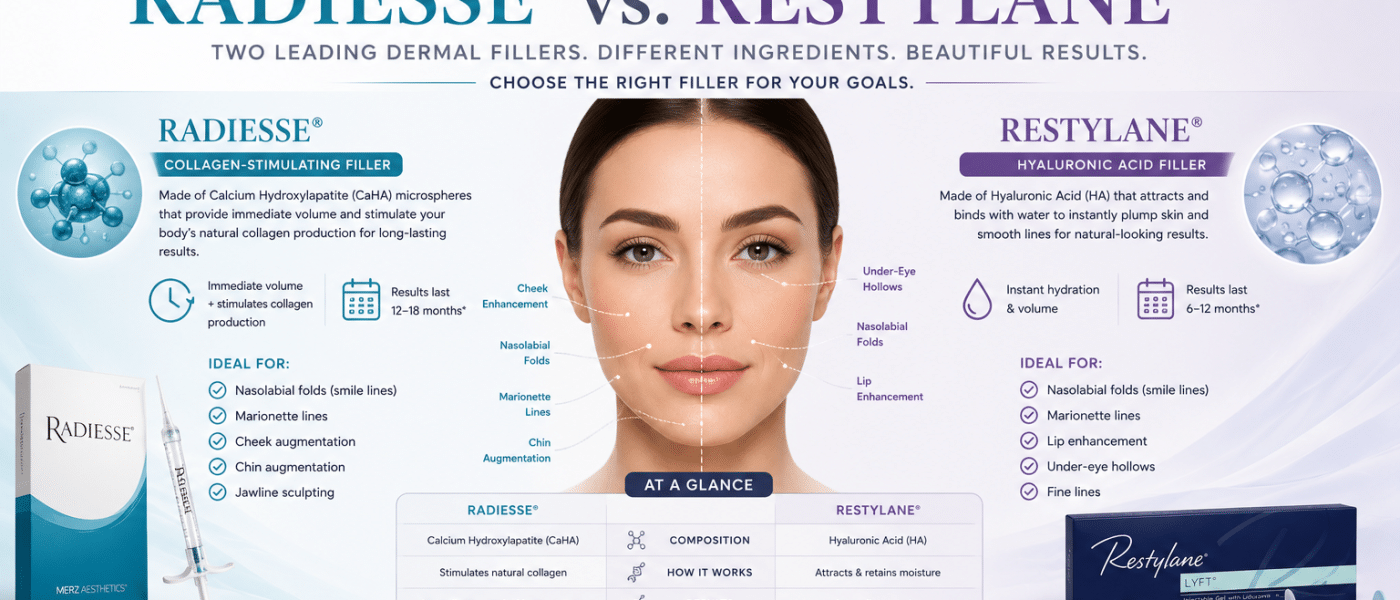
Radiesse® and Restylane® are two popular dermal fillers used to restore facial volume and reduce wrinkles. While both provide natural-looking rejuvenation, they differ in their ingredients, how they work, and the areas they are best suited to treat.
What Is Radiesse?
Radiesse is a calcium hydroxylapatite (CaHA)-based dermal filler that provides immediate volume while also stimulating the body’s natural collagen production. This dual action helps improve skin firmness and delivers long-lasting results, typically lasting 12–18 months.
Radiesse is commonly used for:
Nasolabial folds (smile lines)
Marionette lines
Cheek enhancement
Chin augmentation
Jawline contouring
What Is Restylane?
Restylane is a hyaluronic acid (HA) filler that restores lost volume by attracting and retaining moisture within the skin. It delivers instant results and is ideal for treating fine to moderate wrinkles while maintaining a soft, natural appearance.
Common treatment areas include:
Nasolabial folds
Marionette lines
Lip enhancement
Under-eye hollows
Fine facial lines
Results generally last 6–12 months, depending on the product and treatment area.
Radiesse vs. Restylane
The main difference lies in their composition.
Radiesse stimulates collagen production, making it ideal for deeper facial folds and structural contouring. Because of its thicker consistency, it is best suited for areas requiring support and definition.
Restylane, on the other hand, is softer and more flexible. It is excellent for delicate areas such as the lips and under-eye region. An additional advantage is that hyaluronic acid fillers can be dissolved with hyaluronidase if necessary, while Radiesse cannot.
Which Filler Should You Choose?
Both fillers are safe and effective when administered by a qualified medical professional. Radiesse is often preferred for long-lasting facial contouring and collagen stimulation, while Restylane is ideal for restoring hydration, softening wrinkles, and enhancing delicate facial features.
A professional consultation is the best way to determine which filler is most suitable for your facial anatomy and aesthetic goals.