In today’s competitive healthcare landscape, delivering excellent orthopedic care is only part of building a successful practice. Patients increasingly search online for specialists, compare providers, read reviews, and research treatment options before scheduling an appointment. Without a strong digital presence, even highly experienced orthopedic surgeons may struggle to reach prospective patients.
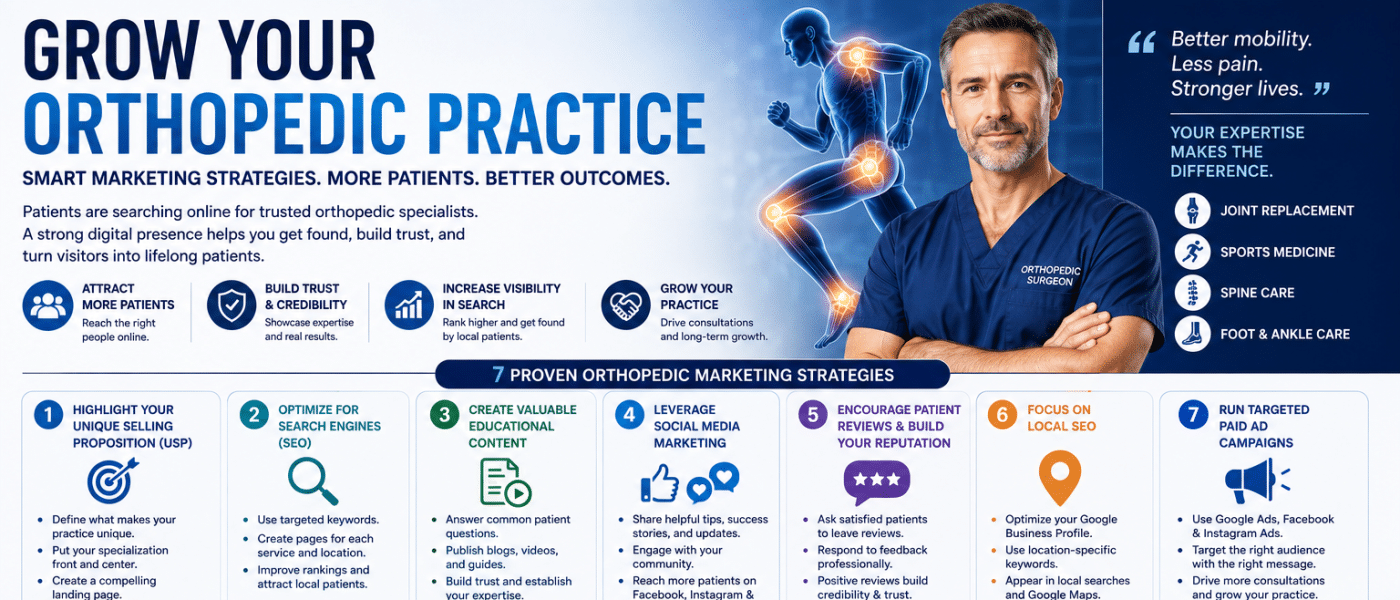
Effective orthopedic marketing combines a professional website, search engine optimization (SEO), patient education, social media engagement, and reputation management to increase visibility and generate qualified leads. By implementing the right marketing strategies, orthopedic practices can strengthen their online presence, build patient trust, and drive sustainable growth.
This article explores proven orthopedic marketing techniques to help your practice stand out and attract the right patients.
Key Takeaways
A clear unique selling proposition (USP) helps differentiate your orthopedic practice from competitors.
A professional, user-friendly website improves patient experience and increases appointment requests.
SEO allows patients to find your practice when searching for orthopedic treatments online.
Educational content establishes your expertise and builds trust with prospective patients.
Patient reviews, local SEO, and social media marketing contribute to long-term practice growth.
Why Digital Marketing Matters for Orthopedic Practices
Most patients begin their healthcare journey with an online search. Whether they’re experiencing chronic knee pain, recovering from a sports injury, or considering joint replacement surgery, they often look for trusted orthopedic specialists before contacting a clinic.
A comprehensive digital marketing strategy helps orthopedic practices:
Increase online visibility
Reach local patients
Build credibility
Generate consultation requests
Strengthen long-term patient relationships
Practices that invest in digital marketing are better positioned to compete in today’s increasingly digital healthcare environment.
1. Highlight Your Unique Selling Proposition (USP)
Your website should immediately communicate what makes your practice different.
Your unique selling proposition may include:
Sports medicine expertise
Joint replacement specialization
Pediatric orthopedics
Hand and upper extremity surgery
Spine care
Foot and ankle surgery
Minimally invasive orthopedic procedures
Visitors should understand within seconds why they should choose your practice over others.
An effective landing page should feature:
A Clear Headline
Use a concise headline that communicates your expertise and patient benefits.
Patient-Focused Content
Explain how your services improve mobility, reduce pain, and restore quality of life.
Strong Calls-to-Action
Encourage visitors to:
Schedule a consultation
Request an appointment
Contact your office
Learn about available treatments
Including physician biographies, patient success stories, and practice photos further strengthens credibility.
2. Optimize Your Website for Search Engines (SEO)
Search engine optimization ensures your website appears when patients search for orthopedic services.
Examples of valuable search terms include:
Orthopedic surgeon near me
Knee replacement specialist
Shoulder surgeon
Sports injury doctor
Hip replacement surgeon
ACL reconstruction
Rather than placing every service on one page, create dedicated pages for each treatment.
Examples include:
Knee replacement surgery
Rotator cuff repair
ACL reconstruction
Hip arthroscopy
Carpal tunnel treatment
Trigger finger release
Separate location pages should also be created for practices serving multiple cities.
This improves local search visibility and helps attract nearby patients.
3. Publish Educational Content
Educational content positions your practice as a trusted medical resource while improving SEO performance.
Popular content formats include:
Blog articles
Procedure guides
Recovery timelines
Frequently asked questions
Infographics
Videos
Patient case studies
Topics patients frequently search for include:
What causes knee pain?
How long does ACL recovery take?
Hip replacement recovery timeline
Arthritis treatment options
Shoulder pain exercises
Providing accurate, easy-to-understand information builds confidence before patients even schedule a consultation.
4. Build a Strong Social Media Presence
Social media helps orthopedic practices educate patients while increasing brand awareness.
Popular platforms include:
Facebook
Instagram
YouTube
LinkedIn
Effective content may include:
Injury prevention tips
Rehabilitation exercises
Surgeon introductions
Behind-the-scenes practice videos
Patient testimonials
Frequently asked questions
New technology and treatment updates
Regular posting and engagement help establish authority and strengthen relationships with prospective patients.
5. Encourage Patient Reviews
Positive online reviews significantly influence healthcare decisions.
Encourage satisfied patients to leave reviews on platforms such as:
Google Business Profile
Healthgrades
Vitals
RateMDs
Trustpilot
Authentic patient testimonials increase credibility, improve local SEO rankings, and help prospective patients feel more confident choosing your practice.
Responding professionally to both positive and negative feedback further demonstrates your commitment to patient care.
6. Invest in Local SEO
Most orthopedic patients search for providers within their geographic area.
Local SEO strategies include:
Optimizing your Google Business Profile
Using location-specific keywords
Creating city-specific landing pages
Maintaining consistent contact information across online directories
Adding structured data (schema markup)
These efforts improve your visibility in local search results and Google Maps.
7. Use Paid Advertising to Reach Qualified Patients
Paid advertising provides immediate visibility while complementing long-term SEO efforts.
Popular advertising channels include:
Google Ads
Facebook Ads
Instagram Ads
YouTube Ads
Successful campaigns feature:
Clear headlines
High-quality visuals
Procedure-specific landing pages
Strong calls-to-action
Mobile-friendly design
Paid campaigns can effectively promote services such as joint replacement, sports medicine consultations, or minimally invasive orthopedic procedures.
Conclusion
Growing an orthopedic practice requires more than exceptional clinical expertise—it demands a comprehensive digital marketing strategy that meets patients where they begin their healthcare journey: online.
By clearly communicating your unique value, optimizing your website for search engines, creating educational content, engaging through social media, encouraging patient reviews, and investing in local SEO and paid advertising, your practice can increase visibility, attract qualified patients, and achieve sustainable long-term growth in today’s competitive orthopedic market.