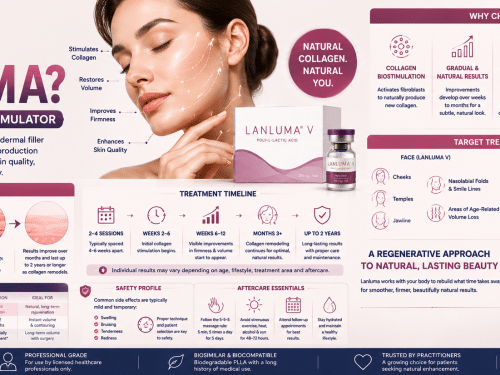
As demand for non-surgical aesthetic treatments continues to grow, collagen-stimulating injectables such as Lanluma have become increasingly popular for improving skin firmness, restoring volume, and enhancing facial and body contours. Unlike traditional hyaluronic acid fillers, Lanluma contains poly-L-lactic acid (PLLA), which works gradually by stimulating the body’s natural collagen production.
Although Lanluma is generally considered well tolerated when administered appropriately, temporary reactions such as swelling, redness, tenderness, and bruising can occur after treatment. Less common complications, including persistent nodules, infection, inflammatory reactions, and vascular events, require careful assessment and prompt medical attention.
Understanding the potential side effects of Lanluma is an important part of treatment planning. Proper patient selection, experienced administration, realistic expectations, and appropriate aftercare can all contribute to safer and more predictable outcomes.
In this article, we’ll explore the common and less common Lanluma side effects, when they typically occur, how they can be managed, and which warning signs should prompt medical evaluation.
Key Takeaways
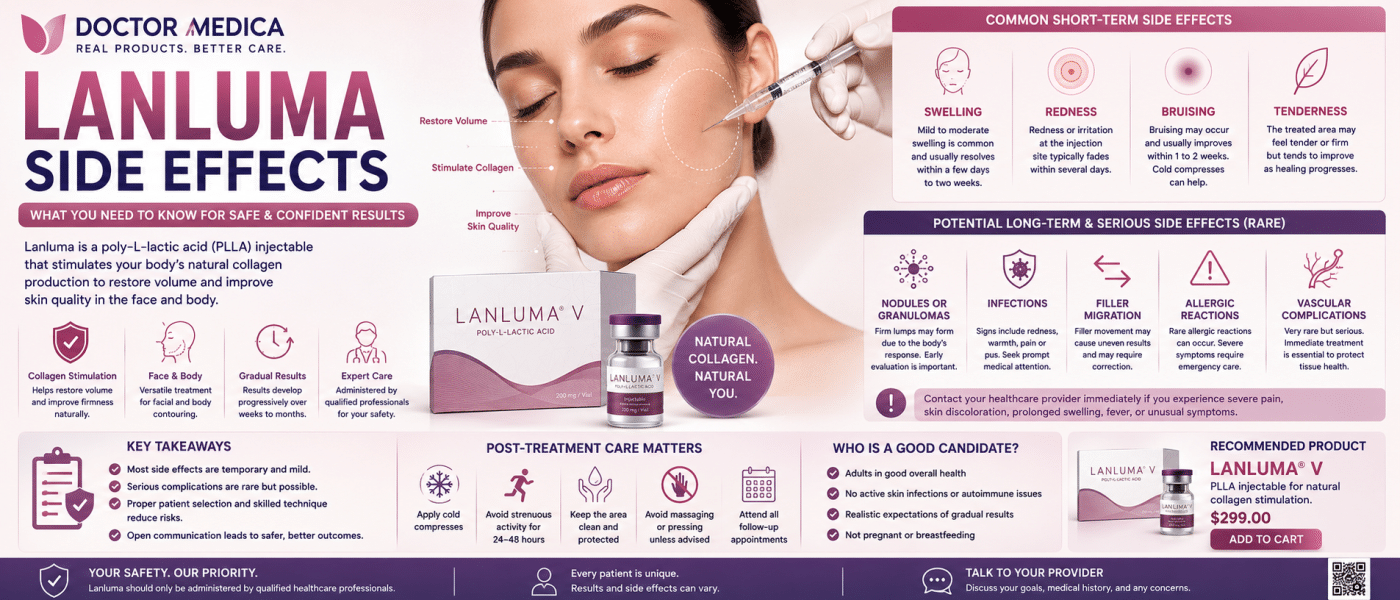
Swelling, redness, tenderness, and bruising are among the most common short-term reactions following Lanluma injections.
Most temporary injection-site reactions improve naturally over several days, although recovery can vary depending on the treatment area and individual patient.
Because Lanluma stimulates collagen production, visible results develop gradually rather than immediately.
Less common complications can include persistent nodules, granulomatous reactions, infection, or prolonged inflammation.
Rare but serious complications associated with injectable treatments can include vascular compromise and tissue injury, requiring urgent professional assessment.
Careful patient screening and treatment planning can help reduce the likelihood of complications.
Lanluma should be administered only by an appropriately qualified and experienced healthcare professional familiar with facial and body anatomy.
Patients should receive clear instructions about expected reactions and warning signs before treatment.
Persistent lumps, increasing pain, spreading redness, significant skin discoloration, or other unusual symptoms should be evaluated by a healthcare professional.
Individual outcomes vary, and treatment suitability should always be determined during a professional consultation.
About: Doctor Medica is your trusted supplier of top-quality dermal fillers, viscosupplements, and a range of medical and aesthetic products for your medical practice. We offer authentic products from leading brands at competitive prices. Contact Doctor Medica today!
Recommended Product
LANLUMA® V
A poly-L-lactic acid injectable designed to stimulate collagen production and support gradual improvements in skin quality and volume.
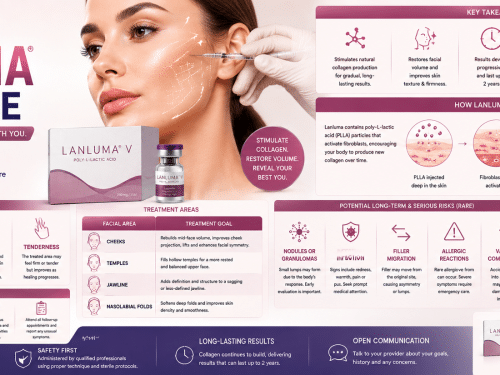
Common Lanluma Side Effects
Most reactions following Lanluma treatment are associated with the injection itself or the body’s temporary inflammatory response. These effects are generally mild and improve as the treatment area heals.
Swelling
Swelling is one of the most frequently reported reactions after injectable aesthetic treatments. It can range from mild puffiness to more noticeable swelling around the treated area.
The degree of swelling depends on several factors, including:
The amount of product administered
The treatment area
The number of injection points
Individual sensitivity
The patient’s healing response
Swelling generally decreases progressively during recovery. Patients should be informed beforehand that temporary changes in the treated area’s appearance do not represent the final Lanluma result.
Redness
Temporary redness can occur around injection points as the skin responds to needle penetration and treatment.
In most cases, mild redness gradually fades during the initial recovery period. Persistent or worsening redness, particularly when accompanied by increasing warmth, pain, or discharge, should be assessed by a healthcare professional.
Bruising
Bruising is another common consequence of injectable procedures. Small blood vessels can be disrupted during needle or cannula placement, resulting in temporary discoloration.
Bruising may appear immediately or become more noticeable during the first few days. It usually resolves naturally, although the duration can vary between patients.
Tenderness and Sensitivity
The treated area may feel tender, firm, or sensitive following treatment. These sensations are usually temporary and tend to improve as the initial inflammatory response settles.
Patients should avoid unnecessarily manipulating the treatment area unless their practitioner has specifically recommended a particular aftercare protocol.
Lanluma Side Effects: Less Common and Delayed Reactions
Because Lanluma stimulates a biological response rather than simply providing immediate volume, some reactions may develop later in the treatment process.
Nodules and Lumps
One of the complications patients and practitioners should understand is the development of persistent nodules or palpable lumps.
These may occur when product distribution, injection depth, treatment technique, or the patient’s inflammatory response contributes to localized accumulation or tissue reaction.
Not every lump following treatment represents a serious complication. Temporary firmness can occur during healing. However, persistent, painful, enlarging, or visible nodules should be evaluated by the treating clinician.
Granulomatous or Inflammatory Reactions
In uncommon cases, the immune system can produce a more prolonged inflammatory response around the injected material. This may present as persistent firmness, swelling, redness, or nodules.
Management depends on the underlying cause and should be determined by an experienced medical professional.
Infection
Although uncommon when appropriate sterile technique is used, infection remains a potential complication of any injectable procedure.
Possible warning signs include:
Increasing redness
Significant warmth
Worsening pain
Progressive swelling
Discharge or pus
Fever or systemic symptoms
Patients experiencing these symptoms should contact their healthcare provider promptly.
Rare but Serious Complications
Patients should also understand that injectable aesthetic procedures carry rare but potentially serious risks.
Vascular Complications
Accidental entry into or compression of a blood vessel can result in vascular compromise and tissue injury. Although uncommon, this is a medical emergency requiring immediate recognition and appropriate treatment.
Sudden severe pain, unusual skin discoloration, blanching, mottling, or changes in the treated area’s appearance should never be ignored.
Severe Allergic or Hypersensitivity Reactions
Significant hypersensitivity reactions are uncommon, but patients should provide their practitioner with a complete history of allergies and previous reactions to injectable treatments.
Difficulty breathing, facial or throat swelling, widespread hives, or other signs of a severe allergic reaction require urgent medical attention.
Why Patient Selection Matters
Reducing the risk of Lanluma side effects begins before the injection itself.
A comprehensive consultation should evaluate the patient’s:
Medical history
Previous aesthetic treatments
Allergies and sensitivities
Current medications
Skin condition
Treatment goals
Expectations regarding the final result
Active infection or significant inflammation in the intended treatment area should be addressed before proceeding.
Patients should also understand that Lanluma is not an instant volumizing treatment. Its effects develop progressively as collagen remodeling takes place. Clear communication about this timeline can help prevent unrealistic expectations and unnecessary concern during the early stages of recovery.
Practitioner Technique and Safety
The experience of the practitioner plays an important role in treatment safety.
Lanluma treatment requires an understanding of:
Facial and body anatomy
Appropriate injection planes
Product characteristics
Treatment-area differences
Patient-specific anatomy
Sterile injection practices
Recognition of potential complications
Treatment should be individualized rather than based solely on a standardized volume or protocol.
For larger body areas, such as the buttocks or hips, careful planning is particularly important because anatomy, tissue thickness, and aesthetic objectives can vary significantly between patients.
Lanluma Side Effects: Recovery and Aftercare
Appropriate aftercare can support a comfortable recovery and help patients recognize when professional advice may be necessary.
Depending on the practitioner’s protocol, patients may be advised to:
Avoid Excessive Physical Activity
Strenuous exercise may temporarily increase circulation, swelling, and discomfort. Patients should follow the specific activity restrictions provided by their healthcare professional.
Protect the Treatment Area
Unnecessary pressure, rubbing, or manipulation should generally be avoided unless massage or another specific aftercare measure has been recommended by the treating practitioner.
Use Cold Compresses When Appropriate
A cool compress may help alleviate temporary swelling or discomfort during the early recovery period. It should be applied gently and according to professional instructions.
Attend Follow-Up Appointments
Follow-up visits allow the practitioner to evaluate healing, assess the development of results, and identify unusual reactions at an early stage.
When Should You Contact Your Practitioner?
Knowing the difference between an expected reaction and a potential complication is essential.
Patients should contact their healthcare provider if they experience:
Swelling that is severe or continues to worsen
Increasing rather than improving pain
Persistent or rapidly enlarging lumps
Significant redness or warmth
Skin discoloration
Discharge from injection sites
Fever or other systemic symptoms
Any sudden or unusual change in the treated area
Severe pain, significant skin color changes, or symptoms suggesting vascular compromise require urgent medical assessment.
Lanluma Side Effects vs Expected Results
An important aspect of patient education is understanding that the early appearance of the treatment area does not necessarily reflect the final outcome.
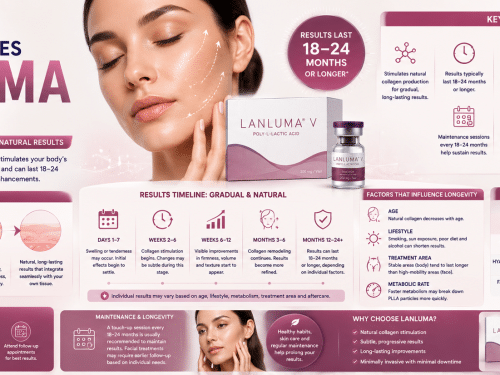
Treatment Stage What Patients May Experience
First few days Swelling, redness, tenderness, or bruising may occur
Early recovery Initial reactions gradually settle
Following weeks Collagen stimulation begins contributing to progressive changes
Several months Improvements in firmness, texture, and volume become more apparent
Longer term Results gradually evolve as collagen remodeling continues
Individual results vary considerably. The number of sessions, treatment area, product characteristics, injection technique, and individual biological response can all influence outcomes.
How to Minimize Lanluma Side Effects
Although complications cannot always be completely eliminated, several measures can help improve treatment safety.
1. Choose a Qualified Practitioner
Select an appropriately trained healthcare professional with experience using collagen-stimulating injectables.
2. Have a Thorough Consultation
Provide complete and accurate information about your medical history, medications, allergies, and previous cosmetic procedures.
3. Follow Treatment Instructions
Pre-treatment and post-treatment instructions should be followed carefully.
4. Avoid Self-Treatment
Lanluma is a medical injectable and should not be administered outside an appropriate professional clinical setting.
5. Report Unexpected Symptoms Early
Early communication can allow potential complications to be investigated and managed before they become more serious.
Conclusion
Lanluma can provide gradual improvements in skin quality, firmness, and volume by stimulating the body’s natural collagen production. Like other injectable aesthetic treatments, however, it can produce temporary side effects and, rarely, more significant complications.
The most common reactions—including swelling, redness, bruising, tenderness, and temporary firmness—are generally manageable and improve during the recovery period. More persistent symptoms, such as nodules or signs of infection, require professional assessment.
Ultimately, safe Lanluma treatment depends on appropriate patient selection, qualified administration, realistic expectations, careful aftercare, and effective communication between the patient and practitioner.
For patients considering Lanluma, the goal should not simply be to minimize side effects, but to ensure that the treatment is medically appropriate and aligned with their individual anatomy, health profile, and aesthetic objectives.
FAQs
1. How long does Lanluma swelling usually last?
Mild swelling commonly improves during the initial recovery period, but the duration can vary depending on the treatment area, treatment extent, and individual healing response.
2. Is it normal to feel lumps after Lanluma?
Temporary firmness or small palpable areas can occur during recovery. Persistent, painful, enlarging, or visibly noticeable nodules should be assessed by the treating practitioner.
3. Can Lanluma cause serious complications?
Serious complications are uncommon but can occur with injectable procedures. Infection, persistent inflammatory reactions, and vascular complications require prompt professional evaluation.
4. How can Lanluma side effects be reduced?
Choosing an experienced qualified practitioner, undergoing appropriate medical screening, following sterile treatment protocols, and adhering to individualized aftercare instructions can help reduce risks.
5. Are Lanluma side effects different when treating the body?
The type of reaction can be similar, but its intensity and recovery may vary depending on the treatment area, tissue characteristics, amount administered, and individual anatomy.
6. When should I seek medical help after Lanluma?
Seek prompt medical advice for worsening pain, significant or persistent swelling, spreading redness, discharge, fever, unusual skin discoloration, or persistent nodules. Sudden severe pain or skin changes require urgent assessment.