As the skin ages, natural collagen production gradually declines, leading to loss of volume, reduced elasticity, fine lines, and changes in facial contours. While surgical facelifts remain an option for significant skin laxity, many patients are increasingly interested in minimally invasive treatments that provide gradual, natural-looking rejuvenation without extensive downtime.
One treatment attracting attention in the field of regenerative aesthetics is Lanluma, a poly-L-lactic acid (PLLA) injectable designed to stimulate the body’s own collagen production. Rather than simply adding immediate volume, Lanluma works progressively, encouraging the skin to rebuild structural support over time.
This makes Lanluma an interesting option for patients seeking a subtle facial lift, improved skin quality, and restored contours without undergoing surgery.
In this article, we explore how Lanluma works for the face, which areas may be treated, what results patients can expect, potential side effects, and the importance of proper patient selection and aftercare.
Key Takeaways
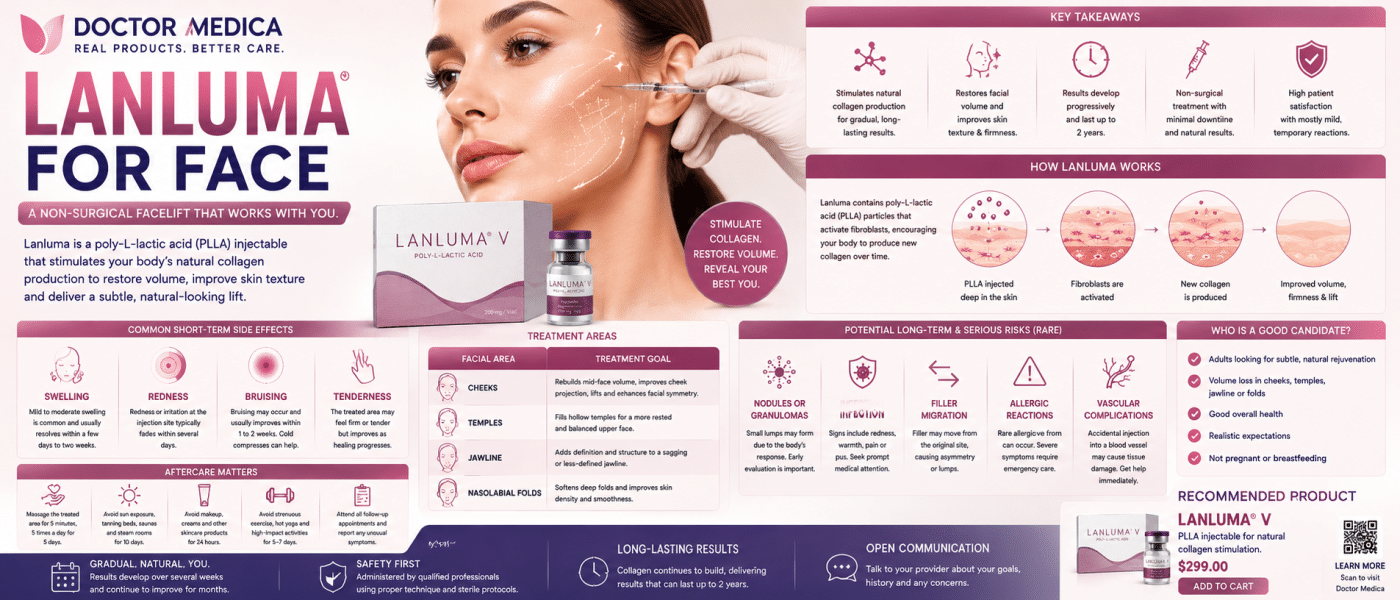
Lanluma is a PLLA-based collagen biostimulator designed to encourage the body’s natural production of collagen.
Unlike traditional hyaluronic acid fillers, results develop gradually over several weeks or months rather than appearing immediately.
Common facial treatment areas may include the cheeks, temples, jawline, and areas affected by volume loss and skin laxity.
The treatment is intended to produce subtle, natural-looking improvements rather than an instant change in facial volume.
Temporary reactions such as swelling, redness, tenderness, or bruising may occur following treatment.
Patient selection, realistic expectations, professional administration, and appropriate follow-up are important for achieving safe and satisfactory outcomes.
Individual results vary depending on age, skin quality, facial anatomy, lifestyle, and treatment plan.
About Lanluma for Facial Rejuvenation
Lanluma contains poly-L-lactic acid (PLLA), a biodegradable synthetic polymer that has been used in medical applications for many years.
When introduced into the appropriate tissue, PLLA acts as a collagen-stimulating agent. Instead of functioning primarily as an instant volumizing filler, it encourages fibroblast activity and the gradual formation of new collagen.
As collagen develops, patients may notice improvements in:
Skin firmness
Elasticity
Facial contours
Skin texture
Areas of volume depletion
Overall facial appearance
The progressive nature of the treatment can be particularly appealing to patients who prefer a more discreet and natural-looking transformation.
How Does Lanluma Work on the Face?
The aging process affects more than just the surface of the skin. Over time, the face can experience changes in fat distribution, collagen density, skin elasticity, and structural support.
Lanluma addresses part of this process by stimulating collagen formation.
Following treatment, the initial effects associated with the procedure gradually settle. The PLLA particles then act as a stimulus for the body’s regenerative response. Over time, newly produced collagen contributes to improved tissue density and support.
This process explains why Lanluma results are not immediate.
Patients may initially notice little visible change once post-treatment swelling subsides. Improvements can become more apparent over the following weeks and continue developing as collagen remodeling progresses.
This gradual evolution is one of the key differences between collagen biostimulators and conventional volumizing fillers.
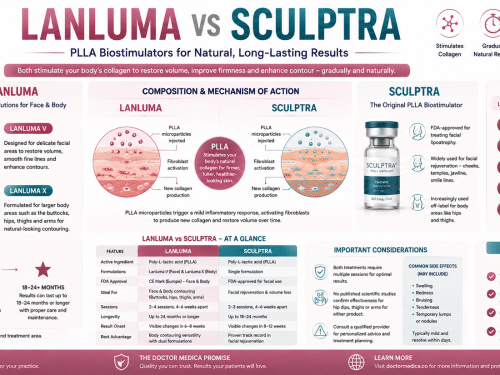
Lanluma vs. Hyaluronic Acid Fillers
Both Lanluma and hyaluronic acid (HA) fillers can be used as part of a facial rejuvenation strategy, but they work differently.
Feature Lanluma Hyaluronic Acid Fillers
Main component Poly-L-lactic acid Hyaluronic acid
Primary action Stimulates collagen Provides volume and hydration
Results Gradual Usually immediate
Treatment approach Biostimulation Direct volumization
Longevity Progressive and potentially long-lasting Depends on product and treatment area
Ideal objective Skin quality and gradual structural restoration Contouring and targeted volume restoration
Neither approach is universally better. The appropriate treatment depends on the patient’s anatomy, skin condition, aesthetic goals, and clinical assessment.
In some treatment plans, different technologies may even be combined to address different aspects of facial aging.
Facial Areas That May Benefit From Lanluma
Lanluma may be considered for several areas affected by age-related changes.
Cheeks
Loss of mid-face volume can make the face appear flatter or more tired. Collagen stimulation may help improve cheek structure and overall facial harmony over time.
Temples
Hollow temples can become more noticeable with aging or changes in body weight. A collagen-stimulating approach may help restore a softer transition between the upper and middle face.
Jawline
Age-related collagen loss and skin laxity can contribute to reduced jawline definition. Improving tissue quality may help create a firmer and more refined lower-face appearance.
Lower Face
Areas affected by reduced skin firmness and volume loss may benefit from an overall collagen-building strategy designed to improve facial support gradually.
Treatment suitability varies considerably between patients, so a professional assessment is essential before treatment.
Who May Be a Good Candidate?
Lanluma may be appropriate for adults who are looking for gradual facial rejuvenation rather than an immediate transformation.
Potential candidates may include people experiencing:
Mild to moderate loss of facial volume
Reduced skin firmness
Decreased elasticity
Early signs of facial aging
Hollowing in selected facial areas
A desire for subtle, natural-looking rejuvenation
A preference for minimally invasive aesthetic treatments
However, Lanluma may not be suitable for everyone. A qualified healthcare professional should review the patient’s medical history, skin condition, expectations, and treatment objectives before recommending the procedure.
What Results Can Patients Expect?
One of the most important aspects of Lanluma treatment is understanding its timeline.
Unlike an HA filler, patients should not expect the final result immediately after treatment.
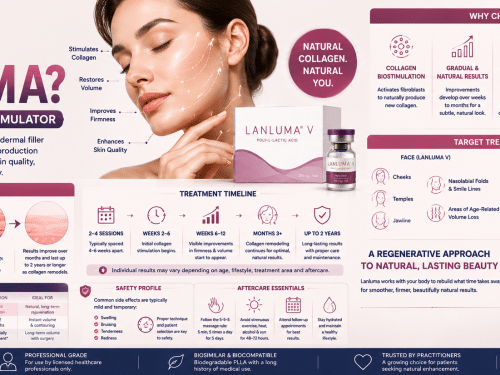
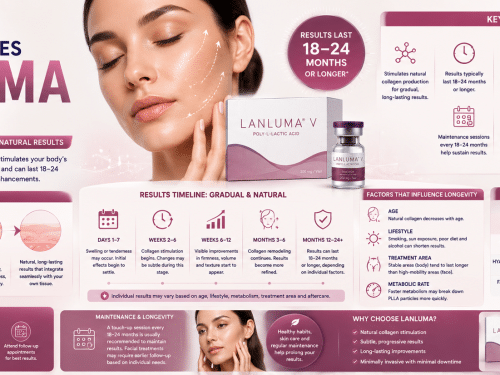
Early Stage
Immediately following the procedure, temporary swelling or other treatment-related changes may make the area appear fuller. These early effects should not be mistaken for the final result.
Weeks 4–8
As the initial treatment effects settle, early improvements in skin quality, firmness, and facial contour may begin to become noticeable.
Months 2–4
Collagen remodeling becomes increasingly apparent, with progressive improvements in texture, elasticity, and structural support.
Later Results
The final outcome develops gradually and can vary significantly between patients. Some individuals may require a course of treatments to achieve their desired level of rejuvenation.
Setting realistic expectations is therefore essential for patient satisfaction.
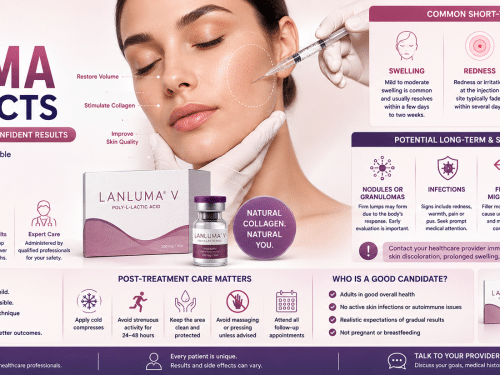
Potential Side Effects of Lanluma for Face
As with any injectable aesthetic procedure, Lanluma can cause temporary reactions.
Common effects may include:
Swelling
Redness
Tenderness
Bruising
Temporary sensitivity
Mild discomfort at treatment sites
These reactions generally improve as the skin recovers.
Less common complications can include persistent lumps or nodules, infection, inflammatory reactions, or other adverse events. Although uncommon, patients should understand the potential risks before treatment and know when to contact their healthcare provider.
Any severe pain, rapidly increasing swelling, significant skin discoloration, or other unexpected symptoms should receive prompt medical assessment.
Patient Selection and Clinical Assessment
Successful facial biostimulation begins with a detailed consultation.
A practitioner should evaluate more than individual wrinkles or folds. Important considerations include:
Overall facial proportions
Skin thickness and elasticity
Existing volume distribution
Degree of facial laxity
Previous aesthetic treatments
Medical history
Patient expectations
Desired degree of rejuvenation
Patients who expect an immediate, dramatic lifting effect may not be ideal candidates for a gradual collagen-stimulating treatment.
Clear communication before treatment helps patients understand that the goal is progressive improvement rather than instant transformation.
Aftercare and Recovery
Following professional aftercare instructions can help support a comfortable recovery.
Depending on the treatment plan and the provider’s recommendations, patients may be advised to:
Avoid excessive pressure or manipulation of treated areas unless specifically instructed.
Limit strenuous physical activity during the initial recovery period.
Avoid excessive heat exposure, such as saunas and steam rooms, immediately after treatment.
Protect the skin from excessive sun exposure.
Follow any recommended massage or skincare protocol provided by the treating professional.
Attend scheduled follow-up appointments.
Contact the provider if unusual or persistent symptoms develop.
Aftercare recommendations should always be individualized according to the treatment performed and the patient’s clinical circumstances.
Lanluma Before and After: What to Look For
Before-and-after photography can be particularly valuable when evaluating collagen-stimulating treatments.
Because the transformation is gradual, comparing standardized photographs can reveal changes that may be difficult to appreciate from memory alone.
When evaluating results, look for improvements in:
Facial symmetry
Cheek definition
Skin firmness
Overall facial contour
Texture and radiance
Appearance of age-related volume loss
It is important to remember that before-and-after results are individual. Factors such as age, skin quality, lifestyle, genetics, and treatment strategy can influence the outcome.
Why Collagen Stimulation Is Becoming Popular
Modern aesthetic medicine is increasingly moving toward treatments that focus not only on adding volume but also on improving the quality of the skin itself.
This shift has created growing interest in biostimulatory treatments such as PLLA.
Rather than creating a visibly “filled” appearance, collagen stimulation aims to work with the body’s own regenerative processes. The result can be a softer, more gradual and natural-looking form of rejuvenation.
For patients who value subtle changes and long-term skin improvement, this approach can be an attractive alternative to more aggressive procedures.
Conclusion
Lanluma for the face represents a collagen-focused approach to facial rejuvenation. By using poly-L-lactic acid to stimulate collagen production, the treatment aims to gradually improve skin firmness, texture, volume, and facial contours.
Its biggest distinction is its progressive nature. Rather than delivering an immediate transformation, Lanluma allows improvements to develop as the body’s collagen-remodeling process takes place.
For suitable patients, this can provide a subtle and natural-looking rejuvenation without the downtime associated with surgical procedures. However, successful treatment depends on appropriate patient selection, realistic expectations, professional assessment, and careful follow-up.
Ultimately, the best aesthetic result is not necessarily the most dramatic one—it is the result that restores harmony, improves skin quality, and remains natural-looking over time.
FAQs
1. What is Lanluma for the face?
Lanluma is a poly-L-lactic acid (PLLA) injectable collagen biostimulator designed to encourage the body’s natural collagen production and gradually improve facial volume and skin quality.
2. Is Lanluma the same as a traditional dermal filler?
No. Lanluma primarily works by stimulating collagen production, while traditional HA fillers generally provide more direct and immediate volume restoration.
3. How quickly do Lanluma results appear?
Results develop gradually. Early improvements may become noticeable over several weeks, while more significant changes can continue developing over the following months.
4. How long can Lanluma results last?
Longevity varies between individuals and depends on factors such as treatment area, number of sessions, age, skin quality, and lifestyle. Patients should discuss expected duration and maintenance with their healthcare provider.
5. Is there downtime after Lanluma?
Lanluma is minimally invasive, but temporary swelling, redness, tenderness, or bruising can occur. Recovery varies depending on the individual and treatment area.
6. Is Lanluma suitable for everyone?
No. A qualified medical professional should assess the patient’s health, anatomy, skin condition, previous treatments, and aesthetic expectations before deciding whether Lanluma is appropriate.