Euflexxa is a hyaluronic acid-based viscosupplement used to treat pain associated with knee osteoarthritis. One of the most common questions patients have before receiving treatment is: “Is Euflexxa a steroid?”
The answer is no. Euflexxa contains sodium hyaluronate, a form of hyaluronic acid, rather than a corticosteroid. It is administered directly into the knee joint and is designed to supplement the properties of synovial fluid, helping improve lubrication and cushioning. The FDA lists Euflexxa as an intra-articular hyaluronic acid device under PMA P010029 for the treatment of knee osteoarthritis pain.
This makes Euflexxa fundamentally different from corticosteroid injections, which are medications designed primarily to reduce inflammation. While both treatments may be used as part of osteoarthritis management, they have different ingredients, mechanisms, treatment goals, and expected timelines for relief.
In this article, we’ll explain whether Euflexxa is a steroid, how it works compared with corticosteroid injections, what patients can expect from treatment, and how clinicians may choose between these approaches.
Key Takeaways
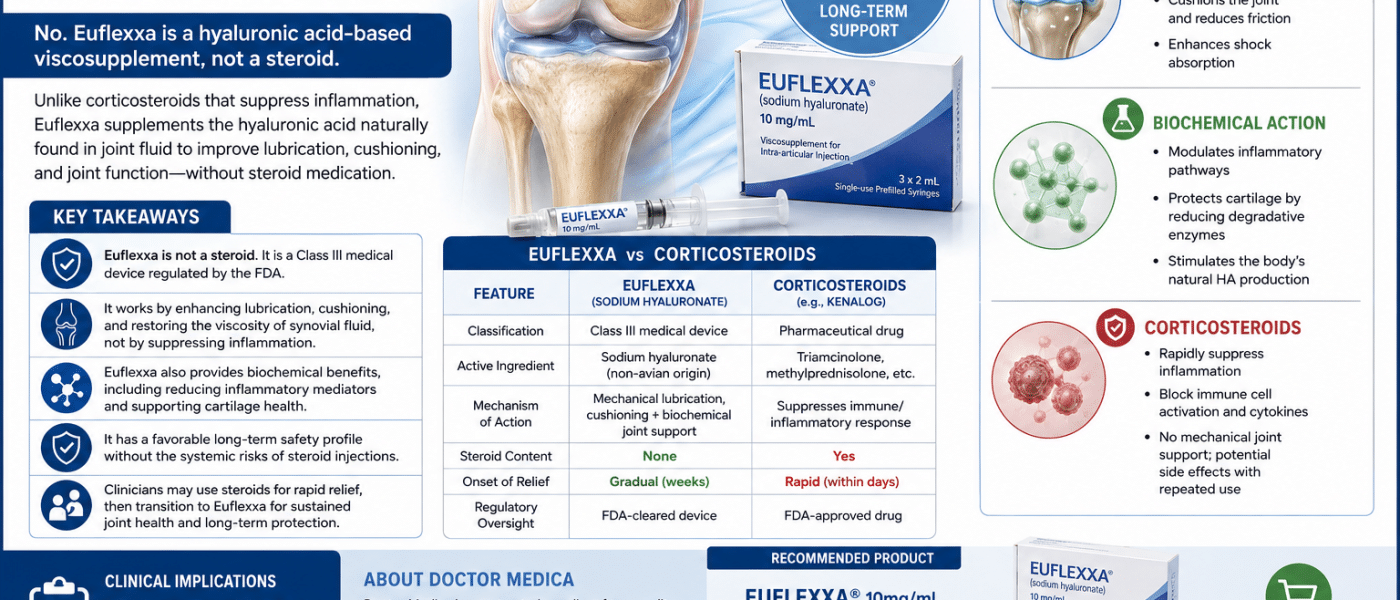
Euflexxa is not a steroid. Its active ingredient is 1% sodium hyaluronate, a form of hyaluronic acid.
Euflexxa is an intra-articular viscosupplement used for pain associated with osteoarthritis of the knee.
Unlike corticosteroids, Euflexxa does not rely on steroid-mediated suppression of inflammation to provide its therapeutic effect.
Euflexxa is designed to supplement the viscoelastic properties of synovial fluid, supporting lubrication and cushioning within the joint.
The standard FDA-approved regimen consists of three 2 mL injections administered one week apart.
Corticosteroid injections may provide faster short-term relief, particularly when inflammation is prominent, but their benefits and risks differ from those of hyaluronic acid injections.
Euflexxa is not associated with the systemic corticosteroid effects that can occur with steroid medications, although intra-articular injections can still cause local adverse reactions.
The appropriate treatment depends on the severity of osteoarthritis, symptoms, previous treatment response, medical history, and clinician assessment.
What Is Euflexxa?
Euflexxa is a 1% sodium hyaluronate injection intended for intra-articular use in patients with knee osteoarthritis who have not responded adequately to conservative non-pharmacological treatment and simple analgesics. The FDA’s PMA documentation identifies its generic device description as hyaluronic acid, intra-articular.
Hyaluronic acid is naturally present in synovial fluid, where it contributes to the fluid’s viscosity and helps the joint move smoothly. In osteoarthritis, changes in the joint environment can reduce the quality and function of synovial fluid, contributing to friction, stiffness, and discomfort.
Euflexxa is designed to supplement these properties by introducing sodium hyaluronate directly into the affected knee.
Importantly, Euflexxa does not contain corticosteroids. It is therefore not comparable to steroid injections such as triamcinolone or methylprednisolone from a pharmacological standpoint.
Euflexxa vs Corticosteroids: What Is the Difference?
Although both Euflexxa and corticosteroid injections can be used for knee osteoarthritis symptoms, their approaches are fundamentally different.
Feature Euflexxa Corticosteroid Injection
Active ingredient Sodium hyaluronate Corticosteroid such as triamcinolone
Contains steroids? No Yes
Primary approach Viscosupplementation Anti-inflammatory therapy
Administration Intra-articular injection Intra-articular injection
Typical onset Gradual Often faster
FDA indication for Euflexxa Knee OA pain Depends on the specific corticosteroid/product
Standard Euflexxa regimen 3 weekly injections Varies by medication and clinical situation
Systemic steroid exposure No corticosteroid exposure Possible, depending on dose and repeated use
Main treatment concept Joint lubrication and cushioning Reduction of inflammatory activity
The distinction is important because the two treatments are not simply different brands of the same type of injection.
Euflexxa supplements hyaluronic acid, while corticosteroids work primarily by modifying inflammatory signaling.
How Does Euflexxa Work in the Knee?
Euflexxa works locally within the knee joint. Its main purpose is to supplement the viscoelastic properties of synovial fluid, helping the joint function more smoothly.
1. Joint Lubrication
Sodium hyaluronate contributes to the lubricating properties of joint fluid. By supplementing hyaluronic acid within the knee, Euflexxa may help reduce friction during movement.
2. Shock Absorption
Hyaluronic acid contributes to the ability of synovial fluid to absorb mechanical loads. This can help support the knee during activities such as walking, standing, or climbing stairs.
3. Improved Joint Function
By supporting lubrication and cushioning, viscosupplementation may help some patients experience improvements in stiffness, discomfort, and mobility.
4. Local Rather Than Systemic Treatment
Euflexxa is injected directly into the affected knee rather than administered systemically. This localized approach distinguishes it from oral medications and means that the treatment is focused on the joint being treated.
The FDA-approved Euflexxa regimen consists of 20 mg/2 mL injected into the target knee once weekly for three weeks.
How Corticosteroid Injections Work
Corticosteroids take a different approach. They are anti-inflammatory medications that can suppress inflammatory activity in and around the joint.
This can be particularly useful when osteoarthritis symptoms are accompanied by significant inflammation, swelling, or an acute flare.
Because corticosteroids act on inflammatory pathways rather than primarily replacing the viscoelastic properties of synovial fluid, they do not provide the same type of viscosupplementation as Euflexxa.
One of the major practical differences is speed of symptom relief. Corticosteroid injections can provide relatively rapid improvement in some patients, while the response to hyaluronic acid treatment may develop more gradually.
Is Euflexxa Safer Than Steroid Injections?
The answer depends on the individual patient and treatment context.
Euflexxa does not expose patients to corticosteroids, so it does not carry the same type of risks associated with repeated corticosteroid exposure. However, this does not mean that Euflexxa is completely free of adverse effects.
The FDA safety documentation for Euflexxa includes precautions related to hypersensitivity to hyaluronan preparations, infection in the knee joint, infection or skin disease at the injection site, and proper injection technique.
Temporary reactions can include:
Knee pain or tenderness
Swelling
Warmth
Stiffness
Redness around the injection area
These reactions are generally localized, but patients should contact their healthcare provider if they experience severe or persistent symptoms following an injection.
As with any intra-articular procedure, appropriate patient selection and sterile injection technique are essential.
Euflexxa Treatment Schedule
One practical advantage of Euflexxa is its clearly defined treatment schedule.
The FDA-approved regimen consists of:
Week 1: First 2 mL injection
Week 2: Second 2 mL injection
Week 3: Third 2 mL injection
FDA clinical documentation describes three weekly Euflexxa injections followed by follow-up over the subsequent months.
This differs from corticosteroid injections, which may be administered according to the specific medication, clinical indication, and patient’s response.
Patients should not assume that more frequent injections will produce better results. The appropriate interval should always be determined by the prescribing or treating clinician.
Euflexxa vs Steroid Injections: Which Is Better?
There is no single treatment that is best for every patient with knee osteoarthritis.
A corticosteroid injection may be considered when rapid short-term symptom control is a priority, particularly when inflammation is contributing significantly to discomfort.
Euflexxa may be considered when the treatment goal is viscosupplementation and support of joint lubrication without corticosteroid exposure.
Clinicians may consider factors such as:
Severity and duration of osteoarthritis
Degree of inflammation and swelling
Previous response to injections
Other medical conditions
Previous treatments and their effectiveness
Patient preferences
Treatment goals and expected duration of benefit
The decision should be individualized rather than based solely on whether one injection is labeled a “steroid” or “non-steroid.”
Can Euflexxa and Steroid Injections Be Used Together?
In some clinical situations, different injectable therapies may be considered as part of a broader osteoarthritis treatment strategy. However, combining or sequencing injections should not be done without professional guidance.
The choice depends on the patient’s symptoms, previous treatments, risk factors, and the specific products being considered.
Patients should also avoid assuming that combining treatments will automatically provide better or longer-lasting results. The potential benefits and risks should be assessed by a qualified healthcare professional.
What Does the Evidence Say About Euflexxa?
Euflexxa received FDA approval through the PMA pathway for treatment of pain associated with knee osteoarthritis. FDA documentation identifies the product as 1% sodium hyaluronate and describes the three-injection weekly regimen.
Clinical outcomes with hyaluronic acid injections can vary between patients. Some individuals experience meaningful improvements in pain and function, while others may experience limited benefit.
This variability is important when discussing Euflexxa with patients. Viscosupplementation should generally be viewed as one component of a broader osteoarthritis management plan that can also include exercise, weight management when appropriate, physical therapy, activity modification, and other treatments.
Conclusion
So, is Euflexxa a steroid? No.
Euflexxa is a hyaluronic acid-based viscosupplement containing sodium hyaluronate, not a corticosteroid. It is FDA-approved for the treatment of pain associated with knee osteoarthritis and is administered directly into the affected knee.
The main difference between Euflexxa and corticosteroid injections lies in their ingredients and mechanisms of action. Corticosteroids are primarily used to suppress inflammation and may provide relatively rapid symptom relief, while Euflexxa is designed to supplement the properties of synovial fluid and support joint lubrication and cushioning.
For patients considering injection therapy for knee osteoarthritis, the choice between Euflexxa and a corticosteroid should be based on individual symptoms, treatment history, medical considerations, and clinical goals.
A healthcare professional can help determine whether viscosupplementation, corticosteroid injection, or another osteoarthritis treatment is most appropriate for the individual patient.