The demand for long-lasting, non-surgical aesthetic treatments continues to grow as patients increasingly seek subtle improvements without the downtime associated with surgery. Rather than relying solely on immediate volume replacement, modern aesthetic medicine is placing greater emphasis on biostimulation—treatments that encourage the body to support its own collagen production.
One of the treatments attracting attention in this area is Lanluma, a poly-L-lactic acid (PLLA)-based injectable designed to stimulate collagen formation. Unlike traditional fillers that primarily provide immediate volume, Lanluma works progressively, with results developing as new collagen is produced and remodeled.
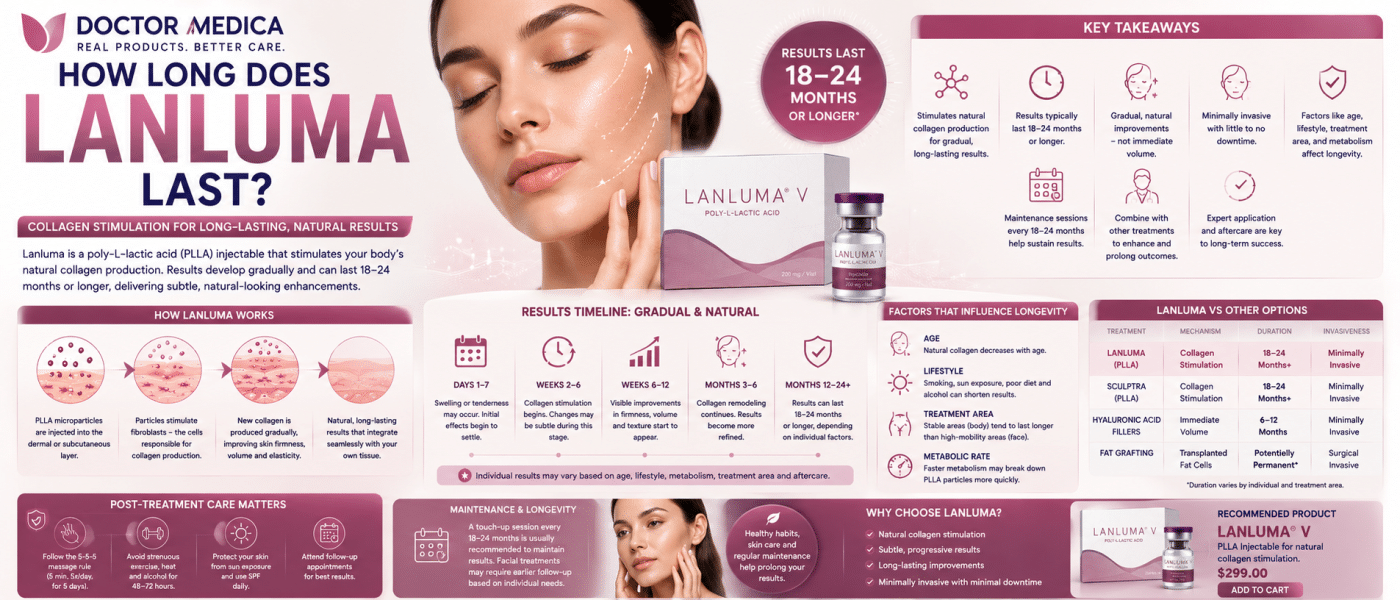
So, how long does Lanluma last? While longevity varies from person to person, aesthetic results are commonly described as lasting around 18–24 months, depending on the treatment area, treatment plan, individual biology, and lifestyle.
In this article, we explore the science behind Lanluma longevity, how results develop over time, which factors can influence durability, and how maintenance strategies can help preserve the outcome.
Key Takeaways
Lanluma is a PLLA-based collagen biostimulator that works by encouraging the body’s natural collagen production.
Results develop gradually rather than appearing immediately after treatment.
Lanluma’s aesthetic effects may last approximately 18–24 months or longer in some patients, although individual results vary.
Age, skin quality, lifestyle, metabolism, treatment area, and treatment protocol can all influence longevity.
A series of treatments is often used to establish the initial result, followed by individualized maintenance when needed.
Healthy lifestyle habits, sun protection, and appropriate skincare can support overall skin quality and help maintain aesthetic results.
Lanluma differs from hyaluronic acid fillers, which generally provide more immediate volume and have different longevity profiles.
Proper patient selection, professional administration, and realistic expectations are essential for achieving satisfactory long-term outcomes.
What Makes Lanluma Long-Lasting?
The longevity of Lanluma is closely connected to its mechanism of action.
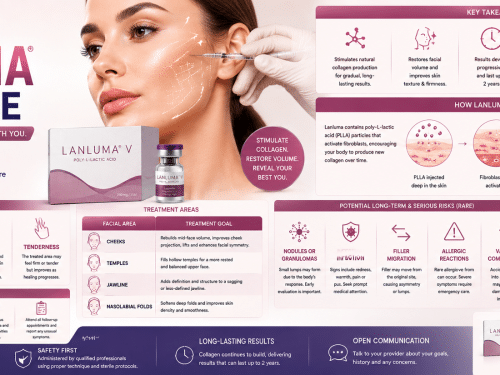
Its active component, poly-L-lactic acid (PLLA), is a biodegradable material that acts as a collagen stimulator. Following treatment, the PLLA particles initiate a biological response that encourages fibroblasts to produce new collagen.
This means that the visible result is not simply dependent on the physical presence of the injected material.
Instead, the treatment works through a process of collagen stimulation and tissue remodeling.
Over time, newly formed collagen can contribute to:
Improved skin firmness
Better elasticity
Restored facial contours
Improved skin texture
Gradual volume enhancement
A more supported and youthful appearance
This regenerative mechanism is one reason Lanluma can provide results that extend well beyond the initial treatment period.
How Long Does Lanluma Last?
For many patients, Lanluma results can remain visible for approximately 18 to 24 months. However, this should be viewed as a general estimate rather than a guarantee.
Some patients may notice a gradual reduction in the effect earlier, while others may continue to appreciate improvements for longer.
Several factors determine the duration of results, including:
Treatment area: Different areas of the face and body respond differently to collagen stimulation.
Number of sessions: Patients undergoing a complete treatment course may achieve more substantial and durable results than those receiving a single session.
Individual biology: Age, metabolic activity, genetics, and natural collagen production can influence how the body responds.
Lifestyle: Smoking, excessive sun exposure, poor nutrition, and other factors can negatively affect collagen health.
Skin quality: Patients with different degrees of collagen depletion and skin laxity may experience different outcomes.
For this reason, longevity should always be discussed as an individualized expectation rather than a fixed timeframe.
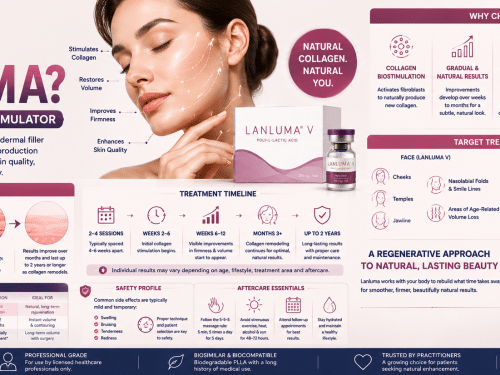
The Lanluma Results Timeline
Understanding the treatment timeline is essential because Lanluma does not behave like an immediate volumizing filler.
Immediately After Treatment
Patients may notice temporary fullness caused by the procedure itself, including swelling. This early appearance does not represent the final Lanluma result.
Weeks 2–6
The initial treatment effects gradually settle. During this stage, patients may feel that there is little visible change.
This is completely different from the immediate volumizing effect associated with many HA fillers.
Weeks 6–12
As collagen production and tissue remodeling progress, early improvements in firmness, texture, and contour may become increasingly noticeable.
Months 3–6
The collagen-building process continues, and the aesthetic result generally becomes more refined. Skin may appear firmer, smoother, and better supported.
Months 12–24+
The established collagen matrix continues to provide structural support. Over time, the effect gradually decreases as the normal aging process continues.
This gradual progression is one of the most important concepts patients should understand before choosing a collagen-stimulating treatment.
Factors That Affect Lanluma Longevity
Not every patient will experience the same duration of results.
1. Age
Natural collagen production decreases with age. Younger patients may have a more active fibroblast response, while older patients may require a more individualized treatment strategy to achieve comparable results.
Age should therefore be considered alongside skin quality, facial anatomy, and overall health, rather than being used as a single predictor of treatment success.
2. Lifestyle
Lifestyle can significantly influence collagen health.
Factors that may accelerate collagen degradation include:
Smoking
Excessive UV exposure
Poor nutrition
Chronic stress
Inadequate skincare
Excessive alcohol consumption
A healthy lifestyle and consistent sun protection can help support the skin’s long-term condition.
3. Treatment Area
The longevity of Lanluma can also vary according to the treated region.
Facial areas exposed to constant movement may respond differently from larger, more stable body areas.
For body contouring applications, treatment planning should account for the size of the area, tissue characteristics, and the patient’s desired outcome.
4. Individual Metabolism
Every patient processes and responds to biomaterials differently.
Metabolic activity, inflammatory response, collagen production, and genetic factors can all influence how long the visible benefits remain.
This is why two patients receiving similar treatment protocols may experience different timelines.
How Many Lanluma Sessions Are Needed?
Lanluma is generally approached as a treatment course rather than a single-session volumizing procedure.
Depending on the patient’s goals and the treatment area, a practitioner may recommend multiple sessions separated by several weeks.
The purpose of a staged treatment plan is to allow the collagen-building process to develop progressively while giving the practitioner an opportunity to evaluate the patient’s response.
A typical plan may involve:
Initial consultation → treatment sessions → collagen-building period → reassessment → maintenance when appropriate
The exact number and timing of sessions should be determined by a qualified healthcare professional based on the individual patient’s anatomy and treatment goals.
Maintenance: How Can Results Be Preserved?
Because aging continues after treatment, maintenance can eventually become part of a long-term aesthetic plan.
Rather than waiting until all visible effects have disappeared, some patients may benefit from a planned reassessment once the initial result begins to decline.
Maintenance timing can vary considerably, but a review around the 18–24-month period may be appropriate for some patients.
A personalized maintenance strategy can help preserve:
Facial definition
Skin firmness
Collagen density
Overall skin quality
The natural appearance achieved during the initial treatment course
Maintenance should never be automatic. The practitioner should reassess the patient’s current anatomy, skin condition, and aesthetic goals before recommending additional treatment.
Lanluma vs. Hyaluronic Acid Fillers: How Long Do They Last?
Lanluma and HA fillers work through different mechanisms, so comparing their longevity requires some context.
Treatment Main Mechanism Typical Result Development General Duration
Lanluma Collagen stimulation Gradual Approximately 18–24 months*
HA Fillers Direct volume restoration Usually immediate Often several months to over a year*
Fat Grafting Transfer of autologous fat Progressive Potentially long-lasting*
*Duration varies according to product, treatment area, patient characteristics, technique, and other factors.
HA fillers can be particularly useful when precise, immediate volume correction is desired.
Lanluma, on the other hand, may be attractive to patients who prefer progressive collagen-based rejuvenation rather than an immediate volumizing effect.
Can Other Treatments Be Combined With Lanluma?
Aesthetic treatment plans increasingly combine different technologies to address different aspects of aging.
Depending on the patient’s needs, a practitioner may consider combining collagen stimulation with treatments such as:
Skin resurfacing
Radiofrequency-based treatments
Microneedling
Ultrasound-based skin tightening
Appropriate skincare programs
Other injectable treatments
However, combination treatments should be planned carefully. Not every procedure should be performed at the same time, and treatment sequencing can be important for safety and optimal outcomes.
A qualified practitioner should determine whether combination therapy is appropriate for an individual patient.
Aftercare and Supporting Long-Term Results
Appropriate aftercare is an important component of any injectable treatment.
Patients should follow the specific instructions provided by their healthcare professional. Depending on the treatment, recommendations may include:
Avoiding unnecessary pressure or manipulation of treated areas.
Limiting strenuous activity immediately after treatment when advised.
Avoiding excessive heat exposure during the initial recovery period.
Protecting treated skin from excessive sun exposure.
Following any practitioner-recommended massage protocol.
Maintaining good hydration and a balanced diet.
Attending scheduled follow-up appointments.
Patients should also contact their provider if they develop persistent swelling, significant pain, unusual skin changes, infection symptoms, or new lumps or nodules.
Lanluma for Face vs. Body: Does Longevity Differ?
Lanluma can be used in aesthetic treatment plans involving both facial and body areas where appropriate.
Facial Applications
Facial treatment commonly focuses on improving the appearance of volume loss, skin laxity, and reduced tissue quality.
Because the face is highly mobile and subject to continuous expression, the visible result may evolve differently from body applications.
Body Contouring
Body applications may involve larger areas and different tissue characteristics. Treatment plans therefore need to account for surface area, tissue thickness, contour goals, and the amount of collagen stimulation required.
Importantly, evidence and regulatory status can vary depending on the specific indication and geographic market. Patients should discuss the intended use with an appropriately qualified professional.
Setting Realistic Expectations
One of the biggest advantages of Lanluma can also be one of its biggest challenges: the result is gradual.
Patients looking for an immediate transformation may be disappointed if they are not properly informed about the timeline.
A good consultation should explain that:
Lanluma is designed to build results progressively, not create an instant change.
Patients should understand the difference between temporary post-treatment fullness and the later result created through collagen remodeling.
Side-by-side photography at follow-up appointments can be particularly useful because gradual improvements can be difficult to recognize when patients see themselves every day.
Conclusion
How long does Lanluma last? For many patients, the visible effects may last approximately 18–24 months, although the actual duration varies according to individual biology, treatment area, treatment protocol, lifestyle, and other factors.
The key to Lanluma’s longevity lies in its collagen-stimulating mechanism. Instead of relying exclusively on temporary volume, PLLA encourages the body’s own regenerative processes to create gradual improvements in tissue structure and skin quality.
For patients seeking a subtle, progressive, and potentially long-lasting aesthetic result, Lanluma can offer an interesting alternative to conventional volumizing treatments.
However, longevity should never be considered separately from patient selection, treatment planning, professional technique, and ongoing maintenance. The most successful results come from a personalized approach that respects the patient’s anatomy, expectations, and natural aging process.
FAQs
1. How long does Lanluma typically last?
Lanluma results are commonly described as lasting around 18–24 months, although individual results can vary and some patients may experience effects for longer.
2. Does Lanluma provide immediate results?
No. Lanluma is a collagen biostimulator, so the main result develops progressively as new collagen is produced.
3. Does everyone need maintenance treatment?
Not necessarily. Maintenance should be individualized and based on the patient’s response, aesthetic goals, and degree of natural aging.
4. What can shorten the duration of Lanluma results?
Factors such as smoking, excessive sun exposure, poor nutrition, age-related collagen decline, and individual biological differences may influence longevity.
5. Is Lanluma longer-lasting than HA filler?
Lanluma and HA fillers work differently. Many HA fillers provide immediate volume and may last several months to over a year, while Lanluma’s effects are gradual and may persist for approximately 18–24 months.
6. Can Lanluma be used for both the face and body?
Lanluma may be used in different aesthetic treatment areas depending on the specific product, indication, local regulatory status, and clinical assessment. A qualified practitioner should determine whether it is appropriate for the intended treatment area.