Hair loss can be a distressing symptom, particularly when it appears unexpectedly during treatment for a chronic condition. Patients receiving Prolia® (denosumab) have occasionally reported increased shedding or hair thinning, raising an important question: can Prolia cause hair loss?
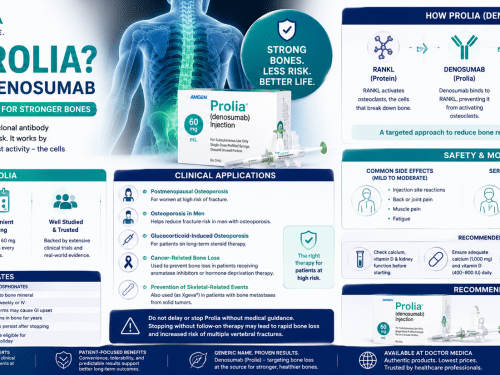
Prolia is a monoclonal antibody used to treat osteoporosis and reduce fracture risk. It works by inhibiting RANK ligand (RANKL), thereby reducing bone resorption. Although hair loss is not among the most common adverse reactions listed in current U.S. prescribing information, alopecia has appeared in earlier Prolia labeling and post-marketing safety information.
The available evidence does not establish a clear causal relationship between Prolia and hair loss. Nevertheless, because hair changes have been reported, clinicians should take these concerns seriously and evaluate other potential causes before attributing the symptom to denosumab.
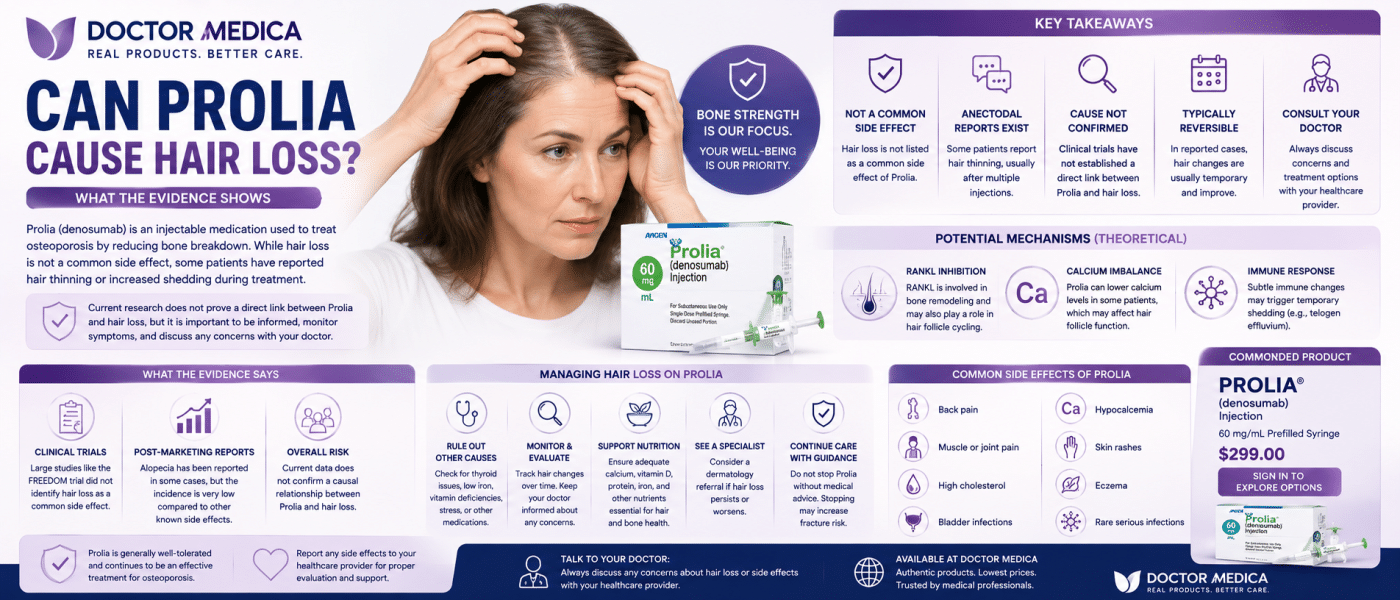
Key Takeaways
Prolia (denosumab) is a RANKL inhibitor used to reduce bone loss and fracture risk in patients with osteoporosis and certain other conditions.
Hair loss is not considered a common adverse reaction in current U.S. prescribing information, although alopecia has appeared in earlier labeling and post-marketing information.
A direct cause-and-effect relationship between Prolia and hair loss has not been firmly established.
Hair shedding during treatment may have other explanations, including thyroid disorders, iron deficiency, nutritional deficiencies, hormonal changes, illness, stress, or other medications.
Possible biological explanations have been proposed, but the mechanisms connecting RANKL inhibition with hair-follicle changes remain theoretical rather than proven.
Patients should not discontinue Prolia independently because stopping or delaying denosumab can have important consequences for bone health.
Persistent, severe, or rapidly progressing hair loss should be evaluated by a healthcare professional, with dermatology referral when appropriate.
Understanding Prolia and Its Mechanism of Action
Prolia contains denosumab, a fully human monoclonal antibody that targets RANKL, an important signaling molecule involved in the formation and activity of osteoclasts.
By blocking RANKL, denosumab reduces osteoclast-mediated bone resorption. This allows bone mineral density to increase and helps reduce the risk of osteoporotic fractures. In the pivotal FREEDOM trial, denosumab was administered as a 60 mg subcutaneous injection every six months and significantly reduced fracture risk in postmenopausal women with osteoporosis.
Unlike medications that directly replace minerals or hormones, Prolia works by modifying a specific signaling pathway involved in bone remodeling.
Because RANKL signaling is also present in tissues outside bone, researchers have considered whether inhibiting this pathway could potentially influence other biological processes. However, a theoretical mechanism alone does not demonstrate that Prolia causes hair loss.
Is Hair Loss a Recognized Side Effect of Prolia?
This question requires some nuance.
The current U.S. prescribing information lists common adverse reactions such as back pain, extremity pain, musculoskeletal pain, hypercholesterolemia, and cystitis in postmenopausal women with osteoporosis. Hair loss is not included among the common adverse reactions in the current highlights.
However, an earlier version of the FDA prescribing information included alopecia in post-marketing reports. Post-marketing reports are important for identifying potential safety signals, but they cannot by themselves establish that a medication caused the reported event.
This distinction is important:
A reported adverse event is not necessarily a proven medication-induced adverse effect.
Patients taking Prolia are often older adults who may simultaneously experience menopause-related hormonal changes, thyroid disorders, nutritional deficiencies, chronic illness, or other medication exposures—all of which can contribute to hair thinning.
What Could Explain Hair Loss During Prolia Treatment?
When hair shedding begins after a Prolia injection, several possibilities should be considered.
1. Telogen Effluvium
One possible explanation is telogen effluvium, a temporary form of diffuse hair shedding that can occur after physiological stress.
Triggers may include:
Significant illness
Surgery
Emotional stress
Rapid weight loss
Nutritional deficiencies
Hormonal changes
Certain medications
Because telogen effluvium can begin weeks or months after a trigger, the timing may make it difficult to identify the underlying cause.
2. Hormonal Changes
Hormonal changes are a major contributor to hair thinning, particularly around and after menopause.
Declining estrogen levels can alter the hair-growth cycle and may make existing androgenetic or age-related hair thinning more noticeable.
3. Nutritional Factors
Low levels of nutrients involved in hair production may contribute to shedding.
Depending on the patient’s medical history, a clinician may consider evaluating factors such as:
Iron status
Vitamin B12
Vitamin D
Protein intake
Thyroid function
Testing should be individualized rather than performed automatically in every patient.
4. Theoretical RANKL-Related Effects
Because RANKL is involved in biological signaling beyond bone tissue, researchers have considered whether its inhibition could influence skin or hair-follicle biology.
However, this remains a hypothesis rather than an established explanation for Prolia-associated hair loss.
What Does Clinical Evidence Tell Us?
Large clinical studies provide important context.
The original FREEDOM trial enrolled 7,808 postmenopausal women with osteoporosis and compared denosumab with placebo over three years. The study demonstrated significant fracture reduction and provided extensive safety data.
Longer-term follow-up from the FREEDOM extension subsequently evaluated women receiving denosumab for up to 10 years. Overall adverse-event rates did not show a progressive increase attributable to long-term treatment, although specific uncommon risks continued to be monitored.
Importantly, hair loss has not emerged as a prominent adverse event in these major clinical datasets.
This means that while individual reports deserve attention, current evidence does not support describing hair loss as a common or definitively established consequence of Prolia therapy.
How Should Hair Loss Be Evaluated in a Prolia Patient?
When a patient develops new hair thinning, the first step should be a structured clinical assessment rather than immediately blaming the medication.
A healthcare professional may review:
Medication History
Consider whether other medications were started or changed around the time the shedding began.
Timing
The relationship between the Prolia injection and onset of hair shedding can provide useful information, although timing alone cannot prove causation.
Pattern of Hair Loss
Diffuse shedding, a widening part, receding hairline, and localized patches can point toward different underlying conditions.
Medical History
Thyroid disease, autoimmune disorders, recent infections, major illness, hormonal changes, and nutritional problems may all be relevant.
Laboratory Testing
Where clinically appropriate, a healthcare professional may consider tests for thyroid function, iron status, or other nutritional or metabolic factors.
Persistent or unexplained hair loss may warrant assessment by a dermatologist, particularly when there are visible scalp changes or significant progression.
Should Patients Stop Prolia if Hair Loss Occurs?
Patients should not stop or postpone Prolia without discussing it with their prescribing clinician.
This is particularly important because denosumab has a specific discontinuation consideration. The FDA prescribing information warns about an increased risk of vertebral fractures following discontinuation, and treatment planning should therefore include appropriate follow-up if Prolia is stopped.
If hair loss occurs, the appropriate approach is generally to:
Document when the shedding started.
Review other potential causes.
Assess the severity and pattern.
Discuss whether continued treatment remains appropriate.
Consider dermatological evaluation when necessary.
The decision should balance the patient’s bone-health needs against the severity and suspected cause of the hair problem.
Other Prolia Safety Considerations
Hair loss is only one part of the overall safety profile.
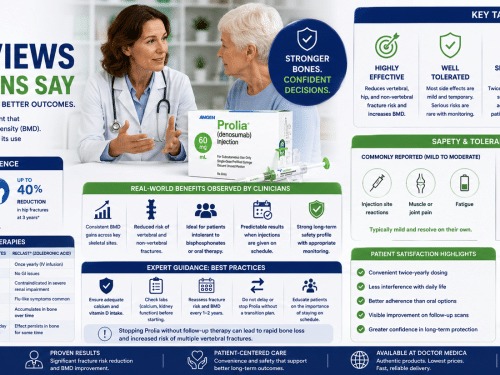
The current FDA labeling highlights several clinically important risks, including severe hypocalcemia in patients with advanced chronic kidney disease, serious infections, dermatologic reactions, severe musculoskeletal pain, osteonecrosis of the jaw, atypical femoral fractures, and vertebral fractures following discontinuation.
For this reason, patients should focus on the complete safety profile rather than a single possible adverse effect.
Healthcare professionals should also ensure that patients receive appropriate monitoring and understand when symptoms require medical attention.
Supporting Hair Health During Treatment
There is no specific supplement proven to prevent Prolia-related hair loss. However, maintaining general nutritional and medical health is important.
Patients should discuss with their healthcare professional:
Adequate protein intake
Appropriate calcium and vitamin D intake
Management of thyroid abnormalities
Evaluation of suspected iron deficiency
Treatment of underlying scalp disorders
Management of stress and sleep problems
The FDA prescribing information recommends calcium and vitamin D supplementation for patients receiving Prolia according to the prescribed regimen.
Importantly, taking high-dose supplements without identifying a deficiency is not necessarily beneficial and may create additional health risks.
When Should Patients Seek Medical Advice?
Hair shedding should be discussed with a healthcare professional when it is:
Sudden or rapidly progressing
Associated with scalp inflammation, pain, or scaling
Occurring in clearly defined patches
Accompanied by other unexplained symptoms
Persistent for several months
Causing significant emotional distress
Urgent medical assessment is appropriate when hair changes occur alongside symptoms suggesting a serious systemic reaction.
Conclusion
So, can Prolia cause hair loss?
The most accurate answer is that hair loss has been reported in association with Prolia, including in earlier post-marketing information, but a definitive causal relationship has not been established and it is not considered a common adverse reaction in current U.S. labeling.
For patients experiencing hair thinning while receiving denosumab, the priority should be a comprehensive evaluation of other common causes before assuming that Prolia is responsible.
Most importantly, patients should not discontinue Prolia on their own. Because denosumab discontinuation can increase vertebral-fracture risk, any change in treatment should be planned with the prescribing healthcare professional.
A careful combination of patient education, symptom monitoring, appropriate investigation, and individualized medical guidance offers the safest approach when hair loss develops during Prolia therapy.
FAQs
1. Is hair loss a common side effect of Prolia?
No. Hair loss is not listed among the common adverse reactions in current U.S. Prolia labeling. However, alopecia has appeared in earlier post-marketing information.
2. Can Prolia cause temporary hair thinning?
A causal relationship has not been established. If temporary shedding occurs, other causes such as telogen effluvium, hormonal changes, illness, nutritional deficiencies, or other medications should also be considered.
3. Should I stop Prolia if my hair starts falling out?
No. Do not stop or delay Prolia without speaking with your healthcare professional because discontinuation can increase the risk of vertebral fractures.
4. What should I do if hair loss continues?
Contact your healthcare professional for an evaluation. Persistent or unexplained hair loss may warrant laboratory testing and/or referral to a dermatologist.