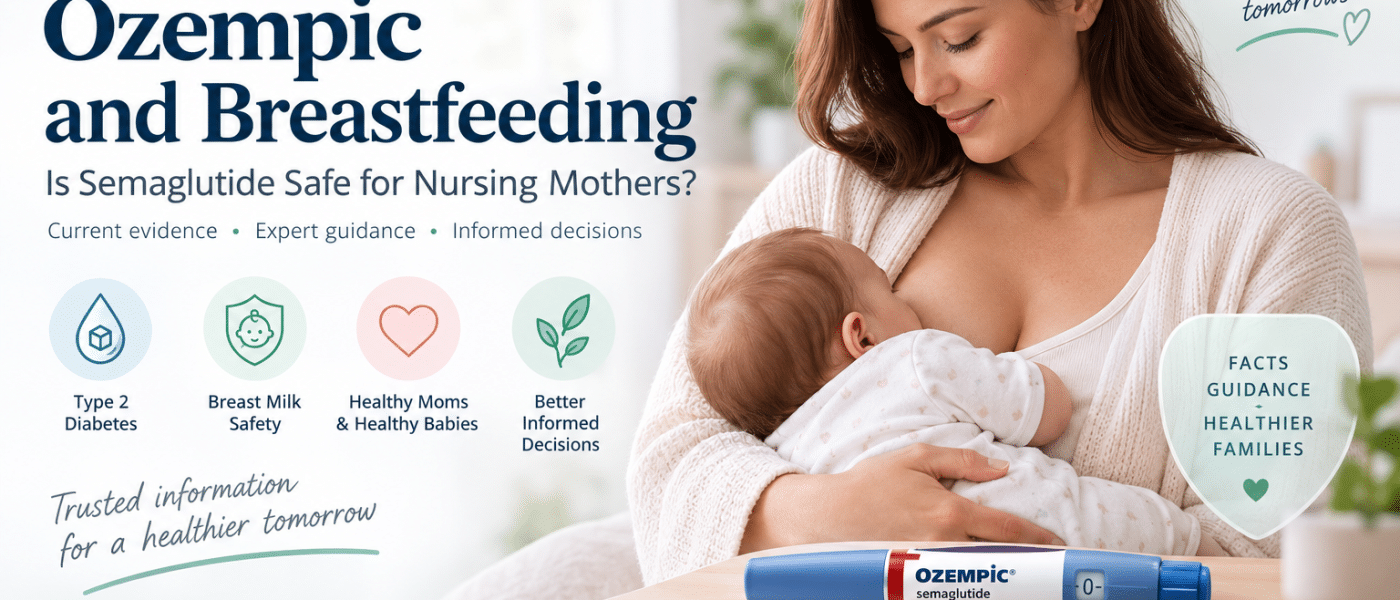
Breastfeeding provides infants with essential nutrients, immune protection, and other health benefits during the earliest stages of life. For mothers living with type 2 diabetes, however, the postpartum period can present additional challenges, particularly when choosing medications that effectively control blood glucose without unnecessarily exposing a breastfeeding infant to potential risks.
Ozempic (semaglutide) is a widely used medication for the treatment of type 2 diabetes. As a glucagon-like peptide-1 (GLP-1) receptor agonist, it helps lower blood glucose levels and can also promote weight loss. Its growing use has raised an important question for women who are breastfeeding: Can Ozempic be used safely during lactation?
The answer is not straightforward. Although emerging research provides some reassuring information about the transfer of semaglutide into breast milk, human safety data remain limited, particularly regarding long-term effects on breastfed infants. As a result, treatment decisions should be individualized and made in consultation with a qualified healthcare professional.
In this article, we’ll examine what is currently known about Ozempic and breastfeeding, including available human and animal data, potential concerns, current prescribing guidance, and alternative treatment options for mothers with type 2 diabetes.
Key Takeaways
Ozempic (semaglutide) is approved for the treatment of type 2 diabetes and has additional cardiovascular and kidney-related indications in certain patients.
Current evidence on semaglutide during breastfeeding remains limited, although a small human milk study found no measurable semaglutide in collected breast milk samples.
The long-term effects of semaglutide exposure on breastfed infants have not been adequately established.
Animal studies have raised concerns about possible effects on offspring, but findings from animals cannot be directly applied to humans.
Insulin and metformin are commonly considered established treatment options for women with diabetes who are breastfeeding.
If semaglutide is being considered during lactation, healthcare professionals should weigh the mother’s clinical needs against the uncertainty surrounding infant safety.
Mothers should not start, stop, or change diabetes medication without consulting their healthcare provider.
Ozempic and Breastfeeding: What Does the Evidence Show?
The main concern surrounding Ozempic during breastfeeding is the limited amount of clinical evidence available. Because pregnant and breastfeeding women are often excluded from clinical trials, there is considerably less information about how semaglutide behaves during lactation than there is for the general adult population.
A small human study published in 2024 evaluated injectable semaglutide concentrations in breast milk. The researchers reported that semaglutide was not detectable in the analyzed milk samples, suggesting that transfer into breast milk may be minimal. However, the study involved a small number of participants, and the absence of detectable drug does not establish that semaglutide is completely risk-free for breastfed infants.
This distinction is important. A medication may be present at very low or undetectable concentrations in breast milk while its long-term effects on infant development, metabolism, appetite, or growth remain uncertain.
For this reason, available evidence should be interpreted cautiously rather than as definitive proof of safety.
Does Ozempic Pass Into Breast Milk?
The available evidence suggests that semaglutide may have very limited transfer into human breast milk.
Semaglutide is a relatively large peptide molecule, which may reduce the extent to which it passes into breast milk. In addition, peptide medications that reach the infant’s gastrointestinal tract may undergo degradation during digestion.
However, these pharmacological characteristics do not eliminate all uncertainty. The amount of medication transferred through breast milk, the infant’s ability to absorb it, and the potential effects of repeated exposure over time are all relevant considerations.
The small human milk study provides encouraging preliminary evidence, but larger studies with longer follow-up are needed before the safety of semaglutide during breastfeeding can be established with confidence.
Potential Concerns for Breastfeeding Mothers
The potential concerns associated with Ozempic during breastfeeding involve both the mother and the infant.
For the mother, semaglutide commonly affects appetite and gastrointestinal function. Possible adverse effects include:
Nausea and vomiting
Diarrhea or constipation
Reduced appetite
Abdominal discomfort
Unintentional or rapid weight loss
These effects may be particularly relevant during breastfeeding because producing milk requires additional energy, fluids, and adequate nutritional intake. Significant appetite suppression, vomiting, or inadequate calorie consumption could make it more difficult for some mothers to maintain their nutritional needs.
For the infant, the primary concern is the lack of sufficient long-term safety data. Researchers have not yet established whether exposure to semaglutide through breast milk could affect:
Infant growth
Appetite and feeding
Blood glucose regulation
Gastrointestinal function
Long-term metabolic development
It is important to emphasize that these are areas of uncertainty rather than confirmed adverse effects in breastfed infants.
Ozempic and Breastfeeding: What Do Animal Studies Tell Us?
Animal studies can provide useful information when human evidence is limited, but their findings must be interpreted carefully.
In studies involving lactating animals, semaglutide was detected in milk at low concentrations. Some studies have also identified effects in offspring exposed to semaglutide, although these findings may be influenced by factors such as maternal weight loss, reduced food intake, or drug exposure during development.
These results do not necessarily mean that the same effects occur in human breastfed infants. Differences in metabolism, drug exposure, development, and dosing make it difficult to translate animal findings directly to people.
Nevertheless, animal data are one reason why clinicians may take a cautious approach to semaglutide during breastfeeding, particularly when alternative treatments with more established lactation safety profiles are available.
Should Breastfeeding Mothers Avoid Ozempic?
There is no single answer that applies to every breastfeeding mother.
The decision depends on several factors, including:
The severity of the mother’s type 2 diabetes
Her current blood glucose control
Previous response to other medications
Whether insulin or metformin can adequately control her condition
The age and health of the breastfeeding infant
The mother’s nutritional status and postpartum weight
The potential benefits of semaglutide compared with available alternatives
For many women, healthcare providers may prefer treatments with more established breastfeeding safety data, particularly when adequate diabetes control can be achieved without semaglutide.
However, treatment decisions should always be individualized. Poorly controlled diabetes can itself pose significant health risks to the mother, so simply avoiding a medication without establishing an effective alternative is not appropriate.
Alternatives to Ozempic During Breastfeeding
For women with type 2 diabetes who wish to continue breastfeeding, several established approaches may be considered.
Insulin
Insulin is commonly used during pregnancy and postpartum and is generally considered compatible with breastfeeding. Because insulin is a protein, it is broken down in the infant’s gastrointestinal tract and is not expected to cause clinically significant exposure through breast milk.
For women who require intensive glucose control, insulin may therefore be an important alternative to GLP-1 receptor agonist therapy.
Metformin
Metformin is another commonly used treatment for type 2 diabetes. Available evidence indicates that only small amounts enter breast milk, and it has a long history of use in women with diabetes during the postpartum period.
For appropriate patients, metformin may provide an effective alternative when breastfeeding is a priority.
Lifestyle Management
Medication is only one component of diabetes management. Balanced nutrition, appropriate physical activity, adequate hydration, sleep, and regular glucose monitoring can also contribute to postpartum glycemic control.
Lifestyle measures should not replace necessary medication, but they can complement pharmacological treatment and support overall maternal health.
Ozempic, Weight Loss, and Breastfeeding
Another important consideration is the use of Ozempic specifically for weight management.
Postpartum weight loss can be a sensitive issue. Breastfeeding itself increases energy requirements, and mothers need sufficient calories and nutrients to support both their own recovery and milk production.
Because semaglutide can significantly reduce appetite and food intake, using it primarily for weight loss while breastfeeding requires particularly careful consideration.
For mothers who have a medical indication for semaglutide, the potential benefits may differ substantially from those of someone seeking treatment solely for cosmetic or elective weight loss. A healthcare professional can help determine whether treatment is appropriate based on the mother’s individual circumstances.
What Should Breastfeeding Mothers Discuss With Their Doctor?
Before starting or continuing Ozempic while breastfeeding, mothers should discuss several factors with their healthcare provider.
These may include:
Current blood glucose levels
HbA1c and overall diabetes control
Current medications
Infant age and health
Breastfeeding frequency
Maternal weight and nutritional intake
Previous response to metformin or insulin
Potential benefits and uncertainties associated with semaglutide
If semaglutide is used, monitoring may include the mother’s weight, hydration, nutritional status, glucose control, and milk supply, as well as the infant’s feeding and growth.
Most importantly, breastfeeding mothers should not discontinue prescribed diabetes treatment without medical advice. Maintaining adequate maternal glucose control remains an essential part of postpartum care.
Conclusion
Ozempic (semaglutide) and breastfeeding remains an area where evidence is developing. Early human research is encouraging, particularly because a small study found no detectable semaglutide in breast milk samples. However, the available evidence is still too limited to establish the long-term safety of semaglutide exposure in breastfed infants.
For breastfeeding mothers with type 2 diabetes, established therapies such as insulin and metformin may be preferred when they provide adequate glucose control. At the same time, the risks of untreated or poorly controlled diabetes must also be considered.
Ultimately, the decision to use Ozempic during breastfeeding should be based on an individualized benefit–risk assessment involving the mother and her healthcare provider. As more lactation research becomes available, clinicians will have a clearer understanding of where semaglutide fits into postpartum diabetes management.
FAQs
1. Can you take Ozempic while breastfeeding?
There is currently limited evidence regarding the safety of Ozempic during breastfeeding. A small human study found no detectable semaglutide in breast milk, but long-term infant safety has not been established. Women should discuss treatment with their healthcare provider.
2. Does Ozempic pass into breast milk?
Preliminary human evidence suggests that injectable semaglutide may have minimal transfer into breast milk. However, available research is limited and cannot yet establish complete safety.
3. What are safer alternatives to Ozempic while breastfeeding?
Insulin and metformin are commonly considered established options for managing type 2 diabetes during breastfeeding. The most appropriate treatment depends on the mother’s individual medical needs.
4. Can Ozempic affect milk supply?
There is no strong evidence establishing that semaglutide directly reduces milk production. However, nausea, vomiting, reduced appetite, inadequate calorie intake, or dehydration could potentially affect a mother’s ability to maintain adequate nutrition and lactation.
5. Should I stop breastfeeding if I take Ozempic?
Do not make this decision without speaking with your healthcare provider. The appropriate approach depends on the mother’s health, the infant’s needs, available alternatives, and the overall benefit–risk assessment.
6. Can Ozempic be used for postpartum weight loss while breastfeeding?
Because semaglutide reduces appetite and food intake and because data on breastfeeding exposure remain limited, its use specifically for postpartum weight loss should be carefully discussed with a healthcare professional.