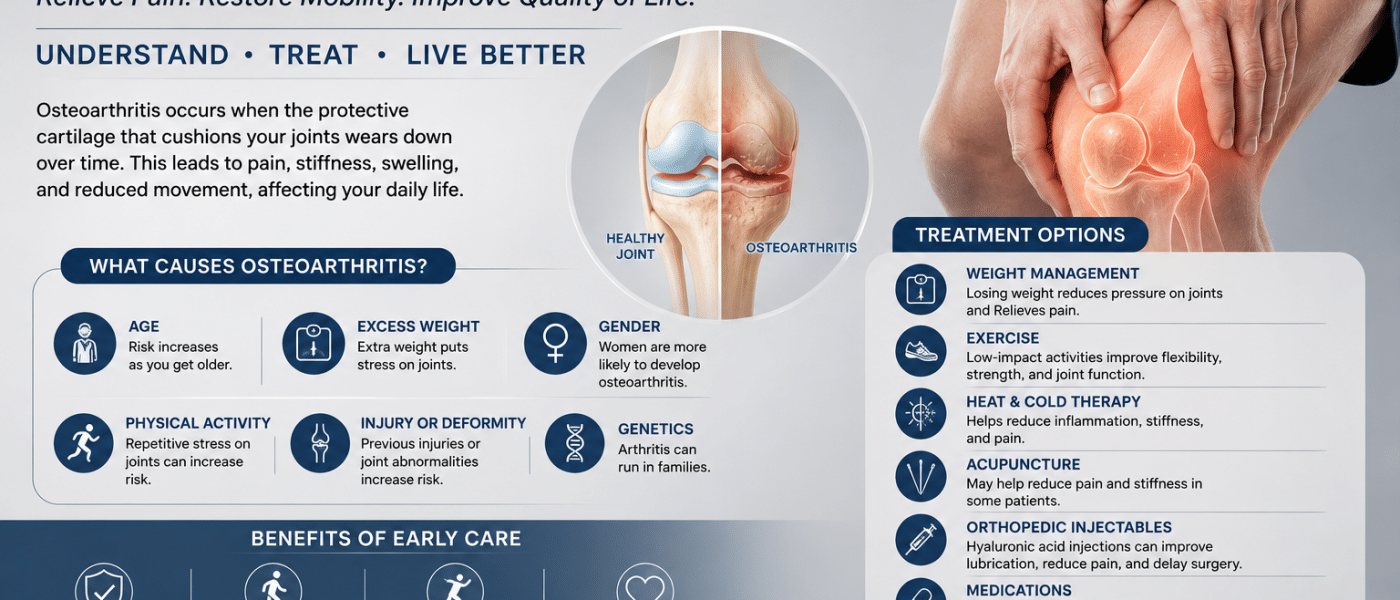
Osteoarthritis is the most common form of arthritis and a degenerative joint condition that develops when the protective cartilage cushioning the ends of bones gradually wears away. As the cartilage becomes thinner, the bones begin to rub against each other, leading to pain, stiffness, swelling, and reduced joint mobility. The condition most frequently affects the knees, hips, hands, and spine, and can significantly impact daily activities if left untreated.
What Causes Osteoarthritis?
Several factors can increase the risk of developing osteoarthritis, including:
Age: The likelihood of osteoarthritis increases as the joints naturally wear down over time.
Excess Weight: Carrying extra body weight places additional stress on weight-bearing joints such as the knees and hips.
Previous Joint Injuries: Sports injuries or trauma can accelerate cartilage degeneration.
Repetitive Joint Stress: Jobs or activities involving repeated joint movements may contribute to joint damage.
Genetics: A family history of osteoarthritis may increase susceptibility.
Joint Abnormalities: Congenital joint deformities or cartilage disorders can raise the risk of developing the condition.
Symptoms of Osteoarthritis
Common symptoms include:
Joint pain during or after movement
Morning stiffness or stiffness after periods of inactivity
Swelling and tenderness around the affected joint
Reduced flexibility and range of motion
Grinding or cracking sensations during movement
Bone spurs that may develop around the joint
Treatment Options
Although osteoarthritis cannot be cured, its symptoms can often be managed effectively with a combination of treatments aimed at reducing pain, improving mobility, and slowing disease progression.
Common treatment options include:
Weight Management: Losing excess weight helps reduce pressure on the joints and relieves pain.
Regular Exercise: Low-impact activities such as walking, swimming, cycling, and strengthening exercises improve flexibility and muscle support.
Physical Therapy: Personalized exercise programs help restore joint function and reduce stiffness.
Heat and Cold Therapy: Warm compresses relax stiff joints, while cold packs help decrease inflammation and swelling.
Pain Relief Medications: Anti-inflammatory medications and pain relievers may provide temporary symptom control.
Joint Injections: Hyaluronic acid and other injectable therapies can improve joint lubrication, reduce discomfort, and enhance mobility in selected patients.
Surgery: In severe cases where conservative treatments are no longer effective, joint replacement surgery may be recommended.
Living with Osteoarthritis
Early diagnosis and appropriate treatment can help individuals remain active and maintain a good quality of life. Combining healthy lifestyle habits, regular physical activity, weight control, and professional medical care can significantly reduce symptoms and improve long-term joint function.