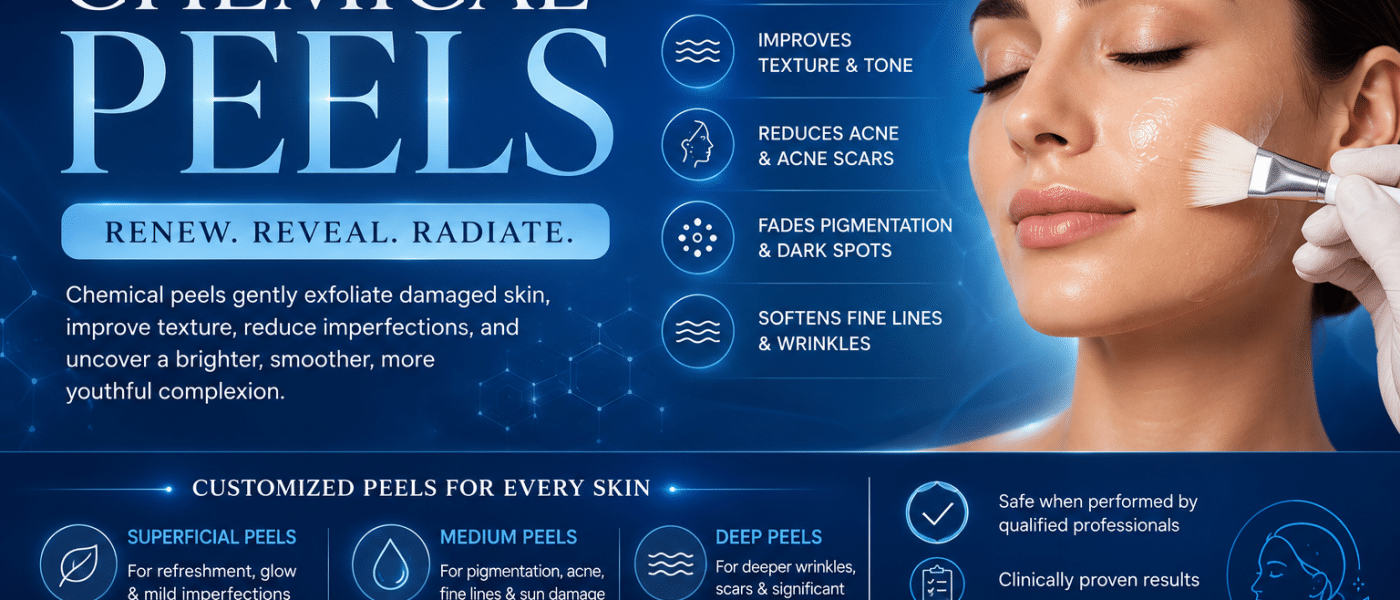
Chemical peels are one of the most effective non-surgical skin rejuvenation treatments available today. The procedure involves applying a specially formulated chemical solution to the skin, which removes damaged outer layers and stimulates the growth of healthier, smoother skin underneath.
Depending on the strength of the solution, chemical peels can improve skin texture, reduce imperfections, and create a brighter, more youthful appearance. They are commonly used to treat acne, pigmentation, fine lines, sun damage, and uneven skin tone.
Are Chemical Peels Safe?
When performed by a qualified skincare professional, chemical peels are considered a safe and effective cosmetic treatment. They have been used for decades in dermatology and aesthetic medicine, with extensive research supporting their effectiveness.
However, like any cosmetic procedure, chemical peels may cause temporary side effects such as redness, peeling, dryness, mild swelling, or increased sensitivity to sunlight. Following proper aftercare instructions is essential for optimal healing and results.
Not everyone is an ideal candidate for a chemical peel. Your practitioner will evaluate your skin type, medical history, and treatment goals before recommending the most appropriate peel.
Who Should Avoid Chemical Peels?
Chemical peels may not be suitable if you:
Have used isotretinoin (Accutane) within the last 6–12 months.
Have active skin infections or open wounds.
Are prone to keloid scarring.
Have certain inflammatory skin conditions.
Have a history of severe cold sores without preventive treatment.
Are pregnant or breastfeeding (depending on the type of peel).
A consultation with a qualified provider is always recommended before treatment.
Can Chemical Peels Improve Acne and Acne Scars?
Yes. Chemical peels are commonly used to reduce active acne by exfoliating clogged pores, decreasing excess oil production, and promoting skin renewal.
They can also improve mild to moderate acne scars over a series of treatments. While superficial scars often become less noticeable, deeper scars may require additional procedures such as microneedling, laser resurfacing, or subcision for optimal results.
Can Chemical Peels Reduce Hyperpigmentation?
Chemical peels are highly effective for treating various forms of pigmentation, including:
Sun spots (age spots)
Post-inflammatory hyperpigmentation (PIH)
Melasma (with appropriate treatment selection)
Uneven skin tone
Acne marks
By accelerating skin cell turnover, chemical peels help fade discoloration and restore a brighter, more even complexion. Daily sunscreen use is essential to maintain results and prevent new pigmentation from developing.
Can Chemical Peels Make Scars Worse?
Scarring after a chemical peel is extremely rare when the treatment is performed correctly and proper aftercare is followed.
In some cases, deeper acne scars may appear more noticeable immediately after the peel because surrounding pigmentation and surface irregularities have improved. As the skin continues to heal and collagen production increases, the overall appearance typically becomes smoother.
Do Chemical Peels Help with Wrinkles?
Chemical peels can soften fine lines, improve skin elasticity, and stimulate collagen production, making the skin appear firmer and more youthful.
Superficial peels are ideal for early signs of aging, while medium and deep peels can provide more significant improvements in wrinkles caused by sun damage and aging. Very deep facial folds may require additional treatments for the best results.
Types of Chemical Peels
Chemical peels are classified according to how deeply they penetrate the skin.
Superficial Peels
These gentle peels remove only the outermost layer of the skin (epidermis). They are ideal for improving dullness, mild acne, uneven skin tone, and fine lines, with minimal downtime.
Medium Peels
Medium-depth peels reach the upper layers of the dermis, making them effective for moderate pigmentation, acne scars, sun damage, and more noticeable wrinkles. Recovery usually takes around one week.
Deep Peels
Deep chemical peels penetrate the deeper layers of the skin and are used to treat severe sun damage, deep wrinkles, and significant textural concerns. They require a longer recovery period and should only be performed by experienced medical professionals.
Aftercare Tips
Proper aftercare is crucial for achieving the best possible results.
Wear broad-spectrum SPF 30–50 sunscreen every day.
Avoid direct sun exposure during healing.
Keep the skin moisturized.
Do not pick or peel flaking skin.
Avoid exfoliating products until your practitioner advises it is safe.
Follow all post-treatment instructions carefully.
Results
Most patients notice brighter, smoother skin within days after a superficial peel, while collagen remodeling and pigmentation improvement continue over several weeks.
For concerns such as acne scars, pigmentation, and signs of aging, a series of treatments may be recommended to achieve the best long-term results.
Chemical peels remain one of the most trusted skin rejuvenation procedures because they are versatile, customizable, and capable of delivering noticeable improvements with minimal downtime when performed by experienced professionals.