Botulinum toxin (BT) is a purified neurotoxin produced by the bacterium Clostridium botulinum, a gram-positive, rod-shaped microorganism. Although the toxin is one of the most potent biological substances known, it has become an essential therapeutic and cosmetic treatment when administered in carefully controlled doses. Several serotypes of botulinum toxin have been identified, with types A and B being the most widely used in clinical practice. Since its introduction for cosmetic use in the late 1980s and subsequent approval by the U.S. Food and Drug Administration (FDA), botulinum toxin type A has become one of the most popular non-surgical treatments for facial rejuvenation.
Types of Botulinum Toxin
Commercially available botulinum toxin products differ in formulation, potency, and clinical application. These products are not interchangeable.
Botulinum Toxin Type A
Botulinum toxin type A is the most frequently used formulation for both cosmetic and medical purposes. It temporarily relaxes targeted muscles by blocking the release of acetylcholine at the neuromuscular junction.
Common brands include:
Botox®
Dysport®
Xeomin®
Botulinum Toxin Type B
Botulinum toxin type B is primarily used for certain neurological disorders and is less common in aesthetic medicine because its effects generally last for a shorter period and may produce more side effects.
Common brand:
Myobloc®
Cosmetic and Medical Applications
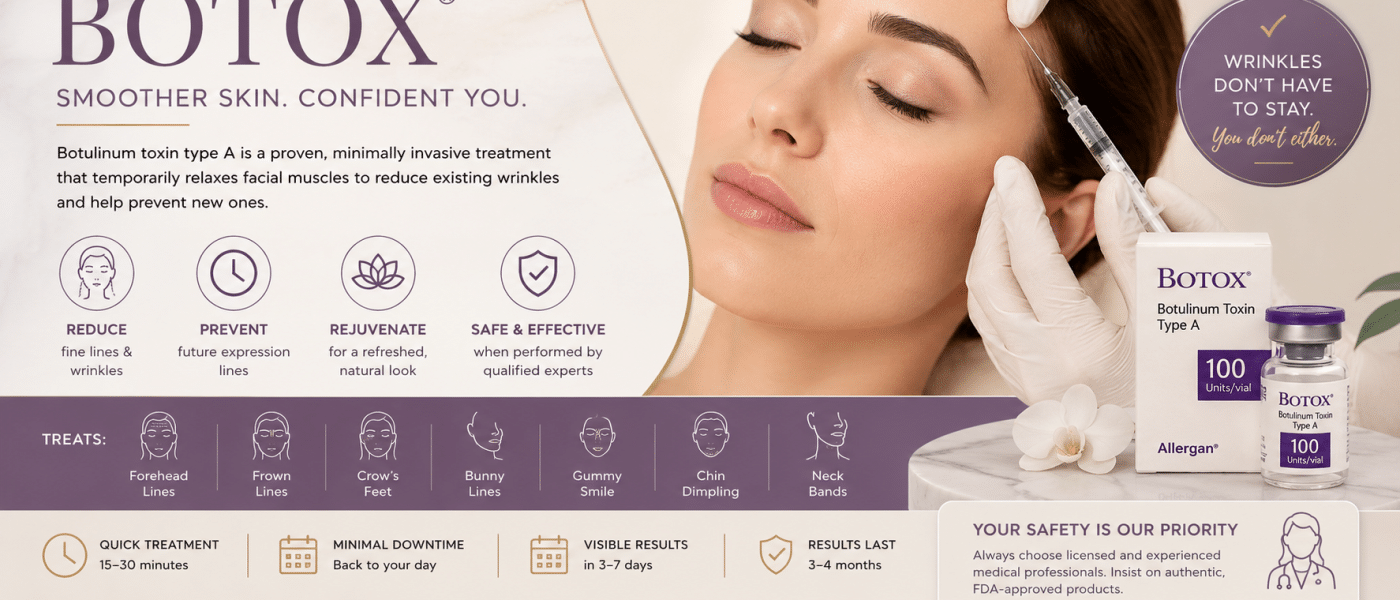
Botulinum toxin is widely used to improve facial appearance by reducing the activity of muscles responsible for dynamic wrinkles. Common treatment areas include:
Forehead lines
Glabellar (frown) lines
Crow’s feet
Bunny lines
Chin dimpling
Neck (platysmal) bands
Gummy smile
Perioral wrinkles
Many patients also choose preventative Botox treatments in their twenties or thirties to delay the formation of permanent expression lines.
In addition to cosmetic applications, botulinum toxin has numerous medical indications, including:
Chronic migraine
Hyperhidrosis (excessive sweating)
Cervical dystonia
Blepharospasm
Muscle spasticity
Overactive bladder
Benefits of Botox
Botulinum toxin offers several advantages:
Minimally invasive treatment with no surgery required.
Quick procedure, typically completed within 15–30 minutes.
Minimal recovery time.
Temporary reduction of facial wrinkles.
Prevention of deeper expression lines.
Natural-looking facial rejuvenation when administered correctly.
Can be combined with dermal fillers, laser therapy, and other aesthetic procedures for enhanced results.
Excellent safety profile when performed by qualified medical professionals.
Results generally become visible within 3–7 days and last approximately 3–4 months.
Risks and Possible Side Effects
Although Botox is considered safe, no medical procedure is entirely risk-free. Most adverse effects are mild and temporary.
Common Side Effects
Mild pain at the injection site
Redness
Swelling
Bruising
Temporary headache
Mild tenderness
These symptoms usually resolve within several days.
Less Common Complications
In rare cases, patients may experience:
Drooping eyelids (ptosis)
Drooping eyebrows
Facial asymmetry
Blurred or double vision
Difficulty swallowing
Dry eyes or excessive tearing
Infection
Most of these complications occur due to improper injection technique or incorrect dosage.
Factors That Increase Risk
Serious complications are uncommon but may occur because of:
Excessive doses of botulinum toxin
Incorrect injection placement
Use of counterfeit or diluted products
Treatment by inexperienced or unlicensed injectors
Underlying neurological or cardiovascular conditions
Choosing an experienced healthcare professional significantly reduces these risks.
Precautions
Botulinum toxin may not be suitable for everyone. Treatment should be avoided or postponed in patients who:
Are pregnant or breastfeeding
Have neuromuscular disorders such as myasthenia gravis
Have known allergies to any component of the product
Have active skin infections at the injection site
Take certain medications, including aminoglycoside antibiotics or drugs that interfere with neuromuscular transmission
A complete medical consultation should always be performed before treatment.
Importance of Qualified Injectors
The success and safety of Botox treatment depend largely on the injector’s knowledge of facial anatomy, appropriate dosing, and injection techniques. Poorly performed injections can result in unsatisfactory cosmetic outcomes, including facial imbalance and prolonged muscle weakness.
Patients should seek treatment only from licensed and experienced medical professionals who use authentic, FDA-approved products.
Conclusion
Botulinum toxin has transformed modern aesthetic medicine by providing a safe, effective, and minimally invasive option for reducing facial wrinkles and treating various medical conditions. When administered by trained healthcare professionals using genuine products, Botox offers predictable results with a low risk of complications. Proper patient selection, accurate injection technique, and thorough understanding of facial anatomy remain essential for achieving optimal outcomes while maintaining patient safety.