Cervical dystonia, also known as spasmodic torticollis, is a neurological disorder that causes involuntary contractions of the neck muscles. These muscle spasms can force the head into abnormal positions, causing pain, stiffness, and difficulty performing everyday activities. Botulinum toxin injections are considered the most effective non-surgical treatment for managing this condition.
How Botulinum Toxin Works
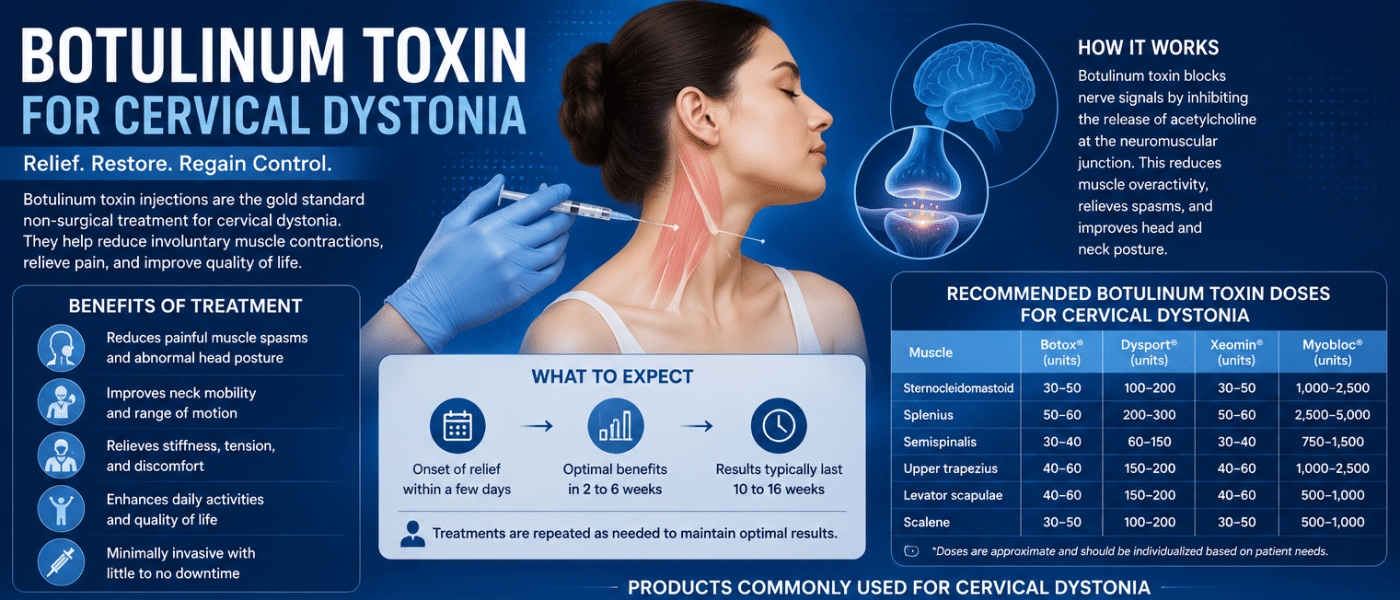
Botulinum toxin acts by temporarily blocking the communication between nerves and muscles. This reduces excessive muscle contractions, allowing the affected muscles to relax and improving head position, neck mobility, and pain levels.
Most patients notice improvement within several days after treatment, while the full therapeutic effect is usually achieved within two to four weeks. Results generally last between three and four months before another treatment session may be required.
Common Botulinum Toxin Products
Several botulinum toxin formulations are approved for the treatment of cervical dystonia, including:
Botox®
Dysport®
Xeomin®
Myobloc®
Although these products work through a similar mechanism, they differ in formulation, dosing, onset of action, and duration. Your physician will recommend the most appropriate option based on your symptoms and medical history.
Benefits of Treatment
Botulinum toxin therapy offers numerous advantages for patients with cervical dystonia:
Relieves painful muscle spasms
Improves neck posture and alignment
Increases range of motion
Reduces muscle stiffness
Enhances daily function and quality of life
Minimally invasive with little or no recovery time
Possible Side Effects
Most patients tolerate treatment well. Temporary side effects may include:
Mild pain or bruising at the injection site
Neck weakness
Difficulty swallowing
Dry mouth
Headache
Temporary fatigue
These reactions are usually mild and resolve without additional treatment.
Is Botulinum Toxin Right for You?
Botulinum toxin therapy is recommended for many adults diagnosed with cervical dystonia, particularly when symptoms interfere with daily activities or cause significant discomfort. Treatment should always be performed by a healthcare professional experienced in movement disorders to ensure accurate muscle selection and optimal results.
Conclusion
Botulinum toxin injections remain the gold-standard therapy for cervical dystonia. When combined with individualized treatment planning and regular follow-up, they can significantly reduce pain, improve mobility, and help patients regain comfort and confidence in their daily lives.