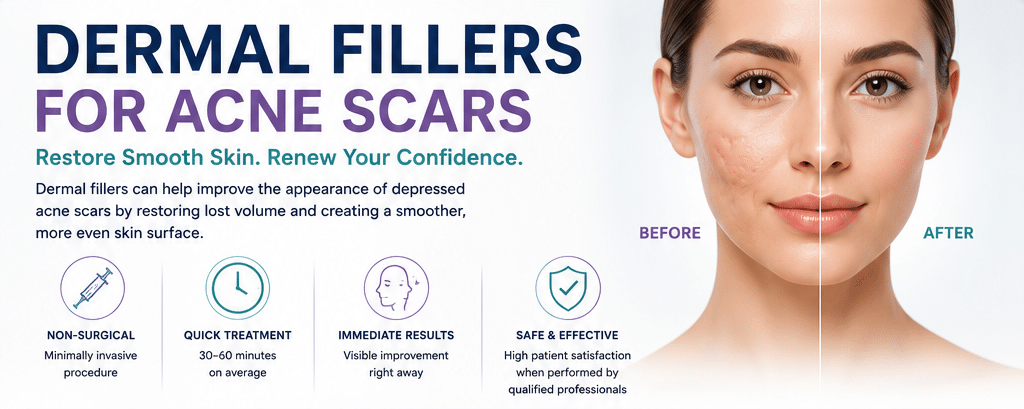
Acne scars can remain long after active acne has cleared, affecting skin texture and self-confidence. While no treatment can completely remove every type of scar, dermal fillers have become an effective non-surgical option for improving the appearance of selected acne scars.
How Do Dermal Fillers Help?
Dermal fillers are injected beneath the skin to lift depressed scars and restore lost volume. By supporting the surrounding tissue, they create a smoother skin surface and reduce the visibility of atrophic acne scars.
Types of Fillers
Different fillers may be used depending on the patient’s skin condition and treatment goals:
Hyaluronic Acid Fillers – Provide immediate volume and hydration with results lasting several months.
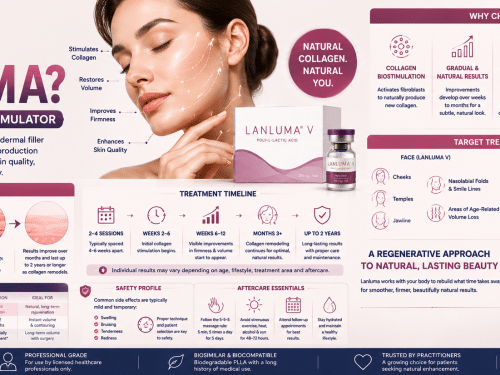
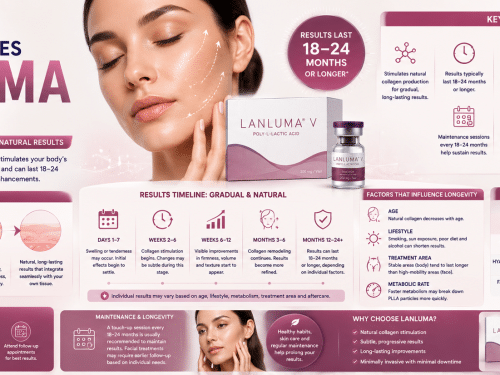
Collagen-Stimulating Fillers – Encourage the body’s natural collagen production for longer-lasting improvement.
Long-Lasting Fillers – Offer extended correction for selected patients when appropriate.
The choice of filler should always be made by a qualified medical professional.
Which Acne Scars Respond Best?
Dermal fillers are most effective for:
Rolling scars
Boxcar scars
Mild to moderate atrophic scars
Deep ice-pick scars usually require different treatment methods and may not respond well to fillers alone.
Benefits of Dermal Fillers
Minimally invasive procedure
Immediate improvement in skin texture
Little downtime
Natural-looking results
Can be combined with other acne scar treatments for enhanced outcomes
Safety and Aftercare
Mild redness, swelling, bruising, or tenderness may occur after treatment and usually resolve within a few days. Patients should avoid intense exercise, excessive sun exposure, and facial massage for a short period following the procedure.
Conclusion
Dermal fillers provide an effective solution for improving the appearance of selected acne scars by restoring volume and smoothing uneven skin. When performed by an experienced practitioner and combined with an individualized treatment plan, fillers can significantly improve skin texture and boost patient confidence.