Botox Therapeutic vs. Botox Cosmetic: What’s the Difference?
Botox is one of the most recognized injectable treatments in the world. While many people associate Botox with wrinkle reduction, it has also been used for decades to treat a variety of medical conditions. In fact, there are two primary formulations manufactured for different purposes: Botox Therapeutic and Botox Cosmetic.
Although they contain the same active ingredient, these products are approved for different indications and are used to achieve different treatment goals.
What Is Botox?
Botox is a prescription medication made from botulinum toxin type A (onabotulinumtoxinA), a purified neurotoxin produced by the bacterium Clostridium botulinum.
In carefully controlled medical doses, Botox temporarily blocks the release of acetylcholine, the neurotransmitter responsible for muscle contraction. By relaxing targeted muscles, Botox can reduce unwanted muscle activity, soften dynamic wrinkles, and relieve several medical conditions associated with excessive muscle contractions or nerve stimulation.
Today, Botox is one of the most extensively researched injectable treatments and is used safely in millions of patients worldwide.
What Do Botox Therapeutic and Botox Cosmetic Have in Common?
Although their clinical applications differ, both products share several important similarities.
The Same Active Ingredient
Both Botox Therapeutic and Botox Cosmetic contain onabotulinumtoxinA, the same purified form of botulinum toxin type A.
They are manufactured using identical purification processes and contain the same inactive ingredients, including:
Human albumin
Sodium chloride
Both products meet strict pharmaceutical manufacturing standards to ensure purity, safety, and consistent potency.
The Same Mechanism of Action
Both formulations work by temporarily blocking the release of acetylcholine at the neuromuscular junction.
Without this chemical messenger, the treated muscle cannot contract normally, resulting in temporary muscle relaxation. As the nerve endings gradually regenerate over several months, normal muscle function returns.
This reversible effect makes Botox both effective and predictable for medical and aesthetic treatments.
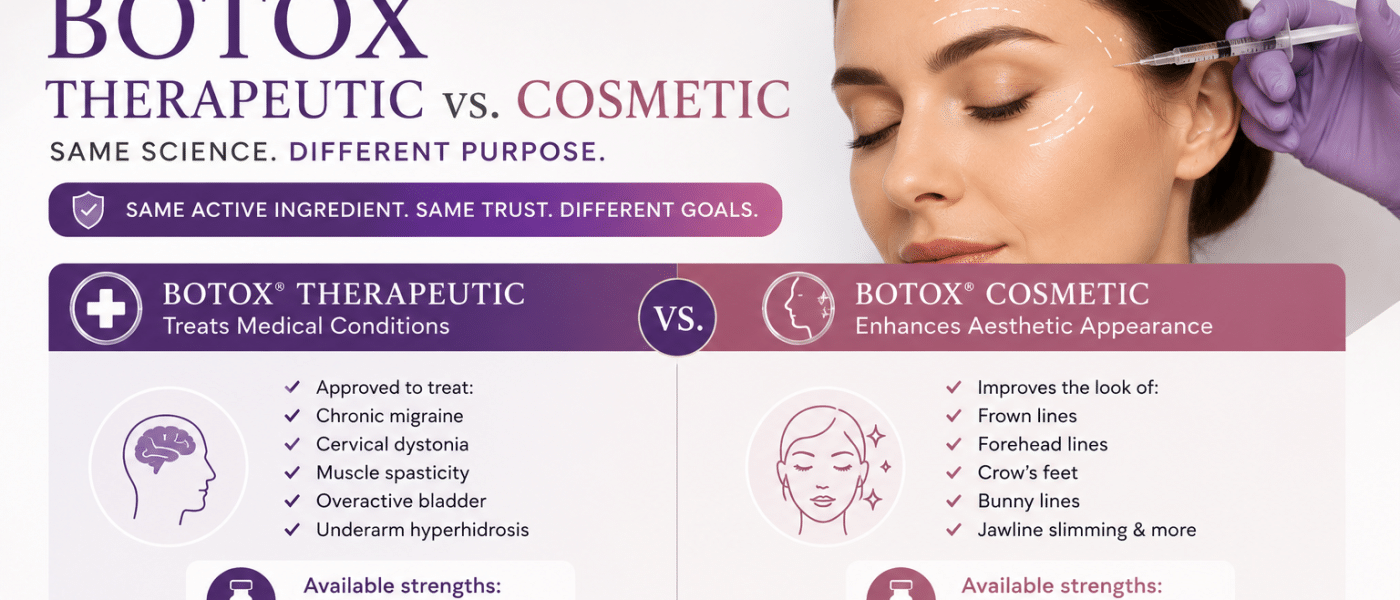
What Is Botox Therapeutic Used For?
Botox Therapeutic is approved to treat a variety of medical conditions caused by excessive muscle activity or abnormal nerve signaling.
Common indications include:
Chronic migraine
Cervical dystonia
Muscle spasticity following stroke or neurological disease
Overactive bladder
Urinary incontinence related to neurological disorders
Blepharospasm (uncontrolled eyelid spasms)
Excessive underarm sweating (axillary hyperhidrosis)
Treatment plans are individualized based on the patient’s condition and the muscles involved.
What Is Botox Cosmetic Used For?
Botox Cosmetic is specifically designed for aesthetic facial rejuvenation.
It is commonly used to temporarily improve the appearance of dynamic wrinkles, including:
Forehead lines
Frown lines (glabellar lines)
Crow’s feet
Bunny lines
Chin dimpling
Neck bands
Lip lines
In addition to FDA-approved indications, experienced practitioners frequently use Botox Cosmetic for off-label procedures such as:
Jawline slimming
Masseter reduction
Brow lift
Lip flip
Facial contouring
These treatments aim to create a more youthful, refreshed appearance while preserving natural facial expressions.
Dosage and Presentation
Although both products contain the same active ingredient, they are available in different vial sizes depending on their intended use.
Botox Therapeutic is commonly supplied in:
100-unit vials
200-unit vials
Botox Cosmetic is typically available in:
50-unit vials
100-unit vials
The number of units used depends on the treatment area, muscle strength, and individual patient needs.
Who Is a Good Candidate?
Botox Cosmetic is generally suitable for healthy adults who wish to reduce facial wrinkles or enhance facial balance without surgery.
Botox Therapeutic may be recommended for patients diagnosed with medical conditions involving excessive muscle activity or nerve-related disorders.
Neither treatment is recommended for patients who:
Are allergic to botulinum toxin preparations
Have an active infection at the injection site
Have certain neuromuscular disorders unless carefully evaluated by their physician
A thorough medical consultation is essential before treatment.
Are the Results Permanent?
No.
Both Botox Therapeutic and Botox Cosmetic provide temporary results.
Depending on the treatment area and individual metabolism, the effects generally last between 3 and 6 months.
Regular maintenance treatments are required to maintain optimal results.
Safety and Side Effects
When administered by a qualified healthcare professional, Botox has an excellent safety profile.
Temporary side effects may include:
Mild swelling
Redness
Bruising
Tenderness at the injection site
Temporary muscle weakness in the treated area
Serious complications are uncommon and are typically associated with improper injection technique or inappropriate patient selection.
Which Botox Treatment Is Right for You?
The choice between Botox Therapeutic and Botox Cosmetic depends entirely on the treatment goal.
If the objective is to treat a medical condition such as chronic migraine, muscle spasticity, or excessive sweating, Botox Therapeutic may be recommended.
If the goal is facial rejuvenation, wrinkle reduction, or non-surgical facial contouring, Botox Cosmetic is the preferred option.
A qualified medical professional can determine the most appropriate treatment after evaluating your medical history, facial anatomy, and aesthetic or therapeutic goals.
Conclusion
Botox Therapeutic and Botox Cosmetic are based on the same scientifically proven active ingredient and share the same mechanism of action. The primary difference lies in their approved clinical indications—one is intended for medical treatment, while the other focuses on aesthetic enhancement.
Whether used to relieve chronic medical conditions or create a smoother, more youthful appearance, Botox remains one of the safest, most effective, and most versatile injectable treatments available in modern medicine.