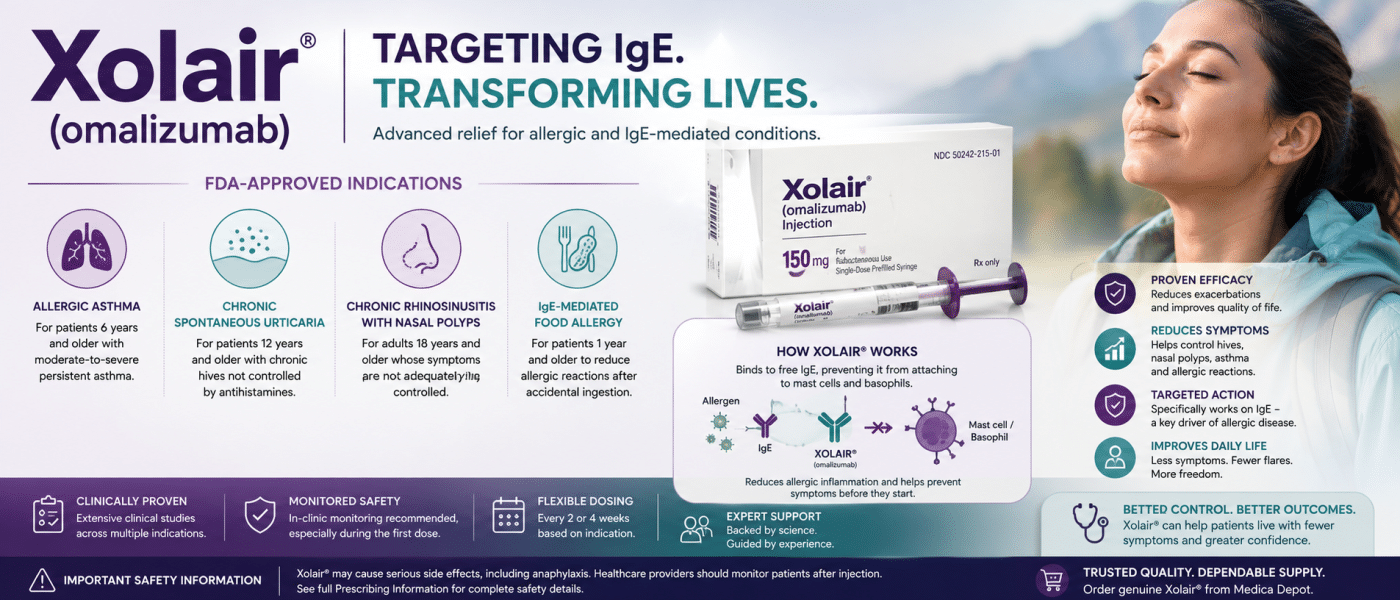
Xolair® (Omalizumab): Indications, Mechanism of Action, Clinical Benefits, and Patient Selection
Allergic diseases continue to affect millions of people worldwide, placing a growing burden on healthcare systems and significantly impacting patients’ quality of life. Conditions such as moderate-to-severe allergic asthma, chronic spontaneous urticaria (CSU), chronic rhinosinusitis with nasal polyps (CRSwNP), and IgE-mediated food allergies often require long-term management when conventional therapies fail to provide adequate symptom control.
Biologic therapies have transformed the treatment landscape for these conditions, offering targeted approaches that address the underlying immune response rather than simply relieving symptoms. Among these therapies, Xolair® (omalizumab) has become one of the most established anti-IgE biologics, supported by extensive clinical evidence and multiple regulatory approvals worldwide.
This article reviews Xolair’s approved indications, explains its mechanism of action, summarizes clinical efficacy, discusses important safety considerations, and outlines practical guidance for healthcare professionals.
Key Takeaways
Xolair® (omalizumab) is an anti-IgE monoclonal antibody used to treat several allergic and inflammatory conditions.
Approved indications include allergic asthma, chronic spontaneous urticaria, chronic rhinosinusitis with nasal polyps, and IgE-mediated food allergy.
Omalizumab works by binding circulating IgE, reducing allergic inflammation and preventing activation of mast cells and basophils.
Dosing varies according to the approved indication, body weight, and baseline IgE levels where applicable.
Careful patient selection and ongoing monitoring are essential to maximize treatment safety and effectiveness.
What Is Xolair?
Xolair is a recombinant humanized monoclonal antibody that selectively targets immunoglobulin E (IgE), one of the key drivers of allergic disease.
Unlike traditional allergy medications that temporarily suppress symptoms, Xolair modifies the allergic cascade by reducing circulating free IgE levels. This targeted mechanism helps decrease allergic inflammation over time while reducing the frequency and severity of symptoms.
Since its introduction, Xolair has become an important biologic therapy across multiple medical specialties, including allergy, pulmonology, dermatology, and otolaryngology.
Approved Indications
Xolair has received regulatory approval for several immune-mediated conditions.
Moderate-to-Severe Allergic Asthma
Xolair is indicated for patients with moderate-to-severe persistent allergic asthma whose symptoms remain inadequately controlled despite inhaled corticosteroids.
Clinical studies have demonstrated that treatment may:
Reduce asthma exacerbations
Improve symptom control
Lower corticosteroid requirements
Enhance overall quality of life
Chronic Spontaneous Urticaria (CSU)
For patients experiencing chronic hives that remain uncontrolled despite antihistamine therapy, Xolair offers an effective treatment option.
Benefits may include:
Reduced frequency of hives
Decreased itching severity
Improved sleep quality
Better daily functioning
Many patients experience noticeable symptom improvement within the first several weeks of treatment.
Chronic Rhinosinusitis with Nasal Polyps (CRSwNP)
Xolair is also approved for adults with chronic rhinosinusitis accompanied by nasal polyps when conventional therapies provide insufficient symptom relief.
Treatment has been shown to improve:
Nasal obstruction
Loss of smell
Sinus inflammation
Nasal polyp size
Overall disease burden
IgE-Mediated Food Allergy
Xolair has expanded treatment options for selected patients with IgE-mediated food allergies by helping reduce the risk of allergic reactions following accidental allergen exposure.
It is important to note that patients must continue avoiding known food allergens, as Xolair is not considered a cure for food allergies.
Mechanism of Action
The effectiveness of Xolair is based on its ability to interrupt the allergic immune response.
Omalizumab binds specifically to free circulating IgE antibodies before they attach to high-affinity IgE receptors located on mast cells and basophils.
As free IgE levels decrease:
Fewer mast cells become activated
Histamine release is reduced
Allergic inflammation decreases
IgE receptor expression declines over time
Overall allergic sensitivity is diminished
This mechanism provides sustained control across several allergic conditions without broadly suppressing the immune system.
Clinical Benefits
Clinical trials and long-term real-world studies have demonstrated consistent benefits across approved indications.
Potential treatment outcomes include:
Fewer asthma attacks
Reduced need for rescue medication
Improved respiratory function
Better control of chronic hives
Reduced nasal congestion
Improved sense of smell
Lower frequency of allergic reactions
Enhanced quality of life
Many patients also experience fewer emergency visits and hospitalizations related to severe allergic disease.
Patient Selection
Successful treatment begins with selecting appropriate candidates.
Healthcare professionals should evaluate:
Confirmed diagnosis
Disease severity
Previous treatment response
Serum IgE levels (when required)
Body weight
Patient age
Relevant comorbidities
Patients should meet all approved prescribing criteria before treatment initiation.
Dosing Considerations
Xolair dosing varies depending on the condition being treated.
For allergic asthma, dosage is determined using:
Baseline serum IgE concentration
Body weight
For chronic spontaneous urticaria, dosing generally follows standardized treatment recommendations regardless of IgE levels.
Treatment is typically administered by subcutaneous injection every two or four weeks, depending on the indication and prescribed regimen.
Safety and Monitoring
Like all biologic therapies, Xolair requires careful safety monitoring.
Common adverse effects may include:
Injection-site reactions
Headache
Fatigue
Joint pain
Upper respiratory tract infections
Although uncommon, serious hypersensitivity reactions, including anaphylaxis, have been reported.
Healthcare providers should monitor patients following administration, particularly during the initial treatment sessions, and educate them about recognizing signs of severe allergic reactions.
Patients with active parasitic infections should be evaluated carefully before initiating therapy because IgE modulation may influence immune responses against helminths.
Practical Considerations
Treatment success depends on regular follow-up and ongoing assessment.
Healthcare professionals should:
Monitor symptom improvement
Evaluate treatment adherence
Review adverse events
Adjust therapy according to clinical response
Continue standard disease management alongside biologic therapy when appropriate
Shared decision-making between clinicians and patients helps optimize long-term outcomes.
Conclusion
Xolair (omalizumab) has become a cornerstone biologic therapy for several chronic allergic conditions by targeting IgE, a central mediator of allergic inflammation. Its proven efficacy in allergic asthma, chronic spontaneous urticaria, chronic rhinosinusitis with nasal polyps, and IgE-mediated food allergy has significantly expanded treatment options for patients who remain symptomatic despite conventional therapies.
Appropriate patient selection, individualized dosing, and careful safety monitoring are essential to achieving the best possible clinical outcomes. When used according to approved prescribing guidelines, Xolair can substantially improve disease control, reduce symptom burden, and enhance patients’ quality of life.
Frequently Asked Questions
What is Xolair used to treat?
Xolair is approved for allergic asthma, chronic spontaneous urticaria, chronic rhinosinusitis with nasal polyps, and selected patients with IgE-mediated food allergy.
How does Xolair work?
It binds circulating IgE antibodies, preventing activation of mast cells and basophils that trigger allergic reactions.
How is Xolair administered?
Xolair is administered as a subcutaneous injection every two or four weeks, depending on the approved indication and dosing schedule.
Is Xolair a cure for allergies?
No. Xolair helps control allergic disease and reduce symptoms but does not permanently cure the underlying condition.
What monitoring is required during treatment?
Patients should be monitored for treatment response, injection-site reactions, hypersensitivity reactions, and other potential adverse events throughout therapy.