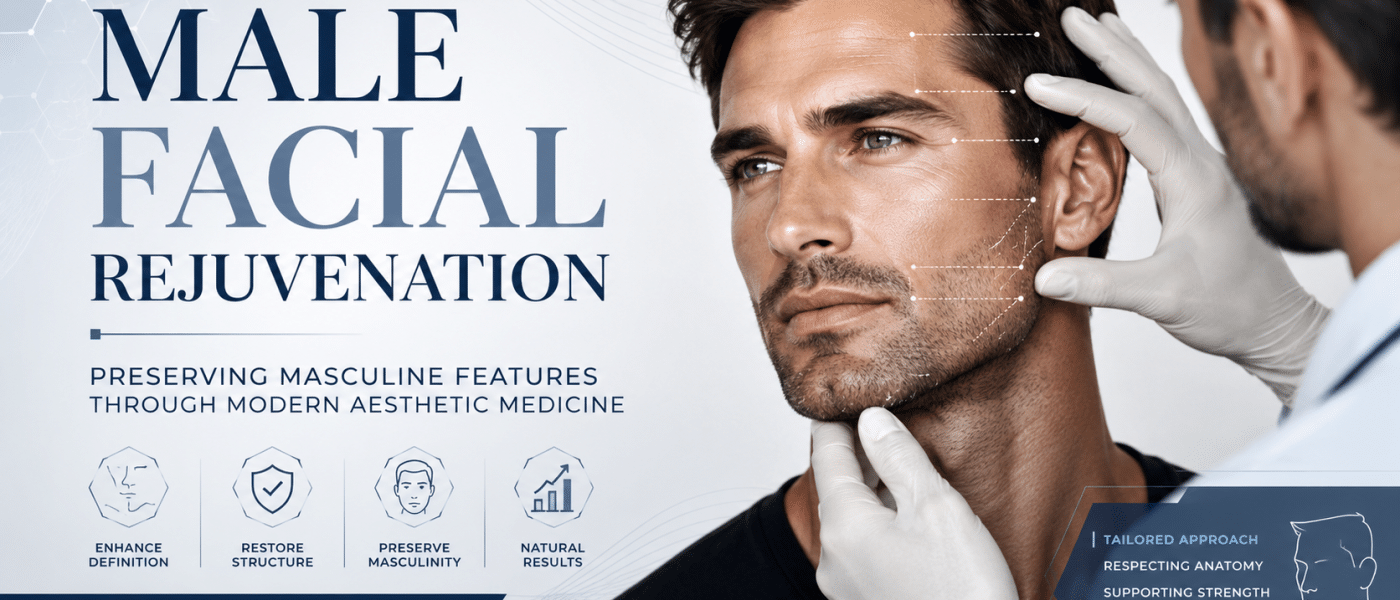
Male Facial Rejuvenation: Preserving Masculine Features in Aesthetic Treatments
As the demand for aesthetic treatments among men continues to grow, practitioners are increasingly recognizing that male facial rejuvenation requires a different approach than female facial enhancement. While many injection techniques have traditionally been developed around female facial anatomy, applying the same principles to male patients can unintentionally create softer, more feminine features. Successful male aesthetic treatment focuses on preserving and enhancing masculine facial characteristics while achieving natural-looking rejuvenation.
Understanding Male Facial Anatomy
Male and female faces differ significantly in both structure and proportions. Testosterone influences facial development during puberty, resulting in stronger bone structure, thicker soft tissues, and more defined facial contours in men. These characteristics include:
A wider, more angular jawline
A stronger chin projection
Flatter cheeks with minimal anterior projection
More prominent zygomatic arches
Straighter, lower-positioned eyebrows
Well-defined facial angles rather than rounded contours
These features contribute to a masculine appearance and should be respected during aesthetic procedures.
Avoiding Feminization
One of the most common mistakes in male facial rejuvenation is using techniques designed for female patients. Excessive cheek projection, rounded midface contours, or overfilled temples can soften the face and diminish masculine definition.
Instead of creating volume in a convex pattern, practitioners should focus on restoring structural support while maintaining flat facial planes. The goal is not to reshape the face but to restore youthful contours without compromising masculine identity.
Midface Restoration
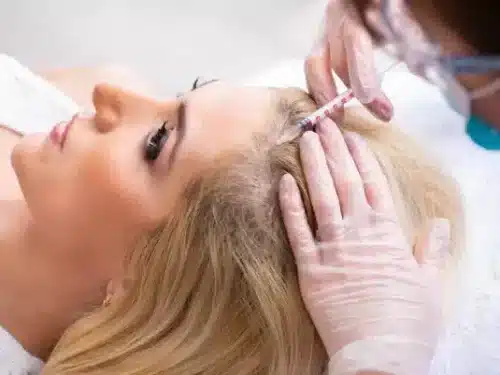
Age-related volume loss in the male midface often results in hollowing beneath the eyes and reduced support of surrounding tissues. Careful placement of hyaluronic acid fillers can restore volume while preserving natural facial proportions.
Treatment should emphasize:
Restoring deep structural support
Maintaining flat cheek contours
Preserving the natural hollow beneath the cheekbone
Enhancing facial definition without excessive projection
This approach creates a refreshed appearance while maintaining strong masculine characteristics.
Jawline and Chin Enhancement
The jawline is one of the defining features of the male face. Aesthetic treatments should aim to reinforce its straight, angular appearance rather than soften its edges.
Strategic filler placement can improve:
Jawline definition
Chin projection
Lower facial balance
Overall facial harmony
Maintaining sharp transitions between facial structures helps preserve a masculine profile.
Selecting the Right Products and Techniques
Choosing the appropriate dermal filler is essential. Products with high cohesivity and lifting capacity provide structural support while integrating naturally into surrounding tissues.
Both cannulas and needles have their place in treatment:
Cannulas are useful for larger treatment areas and help minimize trauma while reducing vascular risk.
Needles allow precise placement in areas requiring stronger structural support or targeted correction.
Treatment should always be individualized according to the patient’s anatomy, age, and aesthetic goals.
Comprehensive Patient Assessment
A thorough consultation is the foundation of successful treatment. Before any procedure, practitioners should evaluate:
Medical history
Previous aesthetic treatments
Current medications
Facial anatomy
Degree of volume loss
Patient expectations
Clinical photography before and after treatment also helps assess outcomes and monitor progress.
Combining Treatments
In addition to dermal fillers, botulinum toxin can complement facial rejuvenation by softening dynamic wrinkles while maintaining a masculine appearance. Conservative dosing is recommended to preserve natural facial movement and expression.
A combination approach often produces balanced, long-lasting results that enhance facial attractiveness without altering gender-specific characteristics.
Conclusion
Male facial aesthetics require a detailed understanding of masculine anatomy and aging patterns. Rather than simply replacing lost volume, practitioners should focus on restoring structure, maintaining angular contours, and preserving the unique characteristics that define the male face. By using gender-specific assessment and treatment techniques, aesthetic professionals can achieve natural, refreshed results that enhance masculinity while respecting each patient’s individual facial identity.